Transgender woman challenges Florida congressional candidate over campaign ad
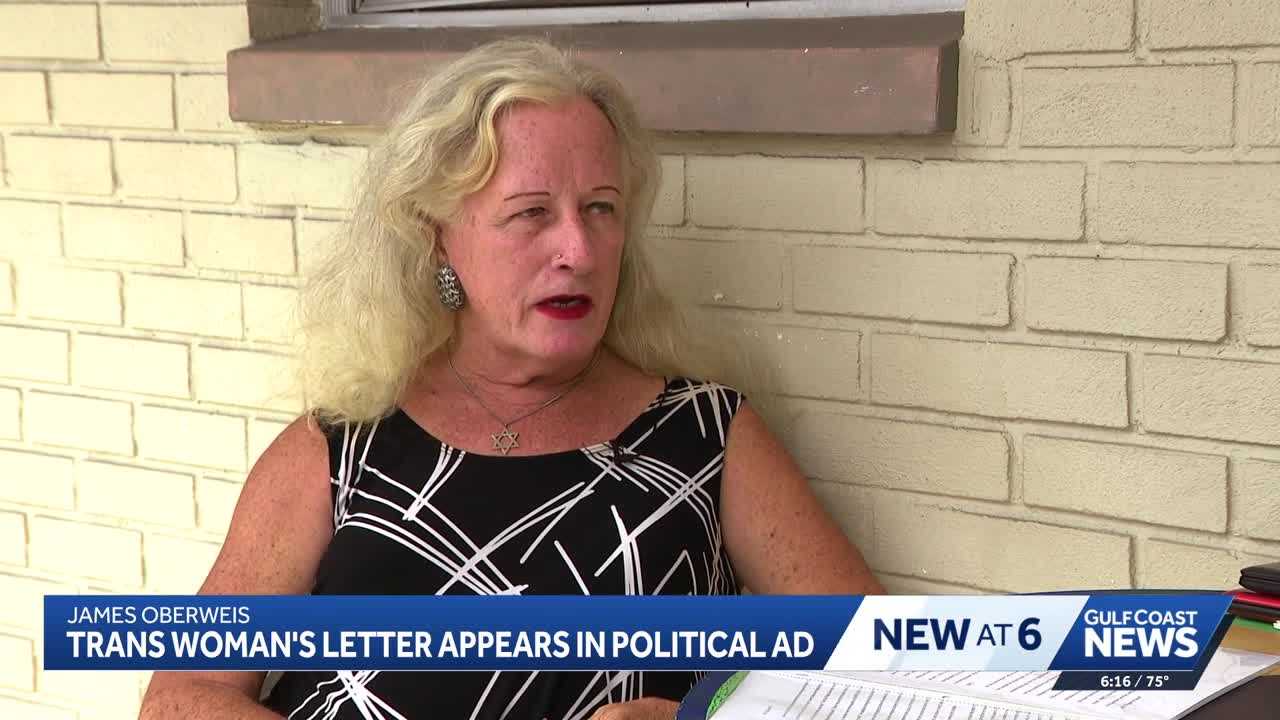
Oberweis's campaign used Satterfield's private letter in an ad, then defended the ad after she asked for its removal or for her name to be taken out.
SOURCE CHECK
TAP FOR WHYWBBH is a local television news outlet, and this report identifies its reporter and includes statements from the person featured in the ad, the campaign, and viewers. The candidate himself did not respond on camera, leaving the campaign’s statement as the only direct response from his side.
- Source type — Established local-news format supports a moderate-to-strong institutional rating.
- Source diversity — Includes the affected person, the campaign's statement, and several viewer reactions.
- Author attribution — The report names a reporter.
- Transparency — The article distinguishes the campaign's statement and interviewees' opinions from reported facts.
The report presents Satterfield's account, the campaign's defense, and a range of viewer reactions. Its main limitation is that Oberweis did not respond on camera and the article offers little additional context about the letter or the campaign's use of it.
HOW WE SCORE ↗The affected person and the campaign are both represented, and viewers express varied opinions. Balance is limited because Oberweis did not respond directly and the report provides little context beyond the competing statements.
- Counterarguments presented — The campaign's defense appears alongside Satterfield's objection.
- Source diversity — The report includes several viewers with differing assessments of the ad.
- Omitted context — The article gives little detail about the original letter or how the campaign obtained it.
- Loaded language — The campaign's charged language is directly quoted and attributed rather than presented as the reporter's own description.
The report uses attributed statements and includes differing reactions to the ad without adopting an explicit partisan position. Its focus on Satterfield's objection and the campaign's defense is consistent with straight event reporting.
- Language tone — The article mainly uses neutral reporting language and attributes charged wording to the campaign.
- Source selection — It includes Satterfield, the campaign, and viewers with different reactions.
- Framing — The story centers on the dispute over the ad rather than making a broader partisan argument.
Jenna Satterfield says congressional candidate Jim Oberweis used a private letter she wrote in a campaign ad without her expectation or consent. She asked him to remove the ad or her name; his campaign defended it with language that drew her criticism.
Jenna Satterfield said she did not expect a private letter she wrote to appear in Jim Oberweis’s campaign ad. She asked for the ad to be taken off the air or for her name to be removed, and publicly asked Oberweis to address the issue. Oberweis declined to respond on camera; his campaign said it stood by the ad and defended its use of her name. Satterfield said she was frustrated by the response and felt the ad put a target on her back.
Viewers interviewed by the station had differing reactions to the ad, with some calling it childish or unclear and another praising its satire. Oberweis was one of 13 Republicans seeking the seat held by Byron Donalds, and he was unavailable for comment. The article said Oberweis and Jim Schwartzel were the only candidates then advertising on television.
Community verdict
8 VOTESPeople in this story
SWIPE →Florida House candidate whose campaign ad used a private letter from Jenna Satterfield

Florida representative holding the seat Oberweis was seeking

Florida House candidate also advertising on television
Discussion · 0
Loading comments…