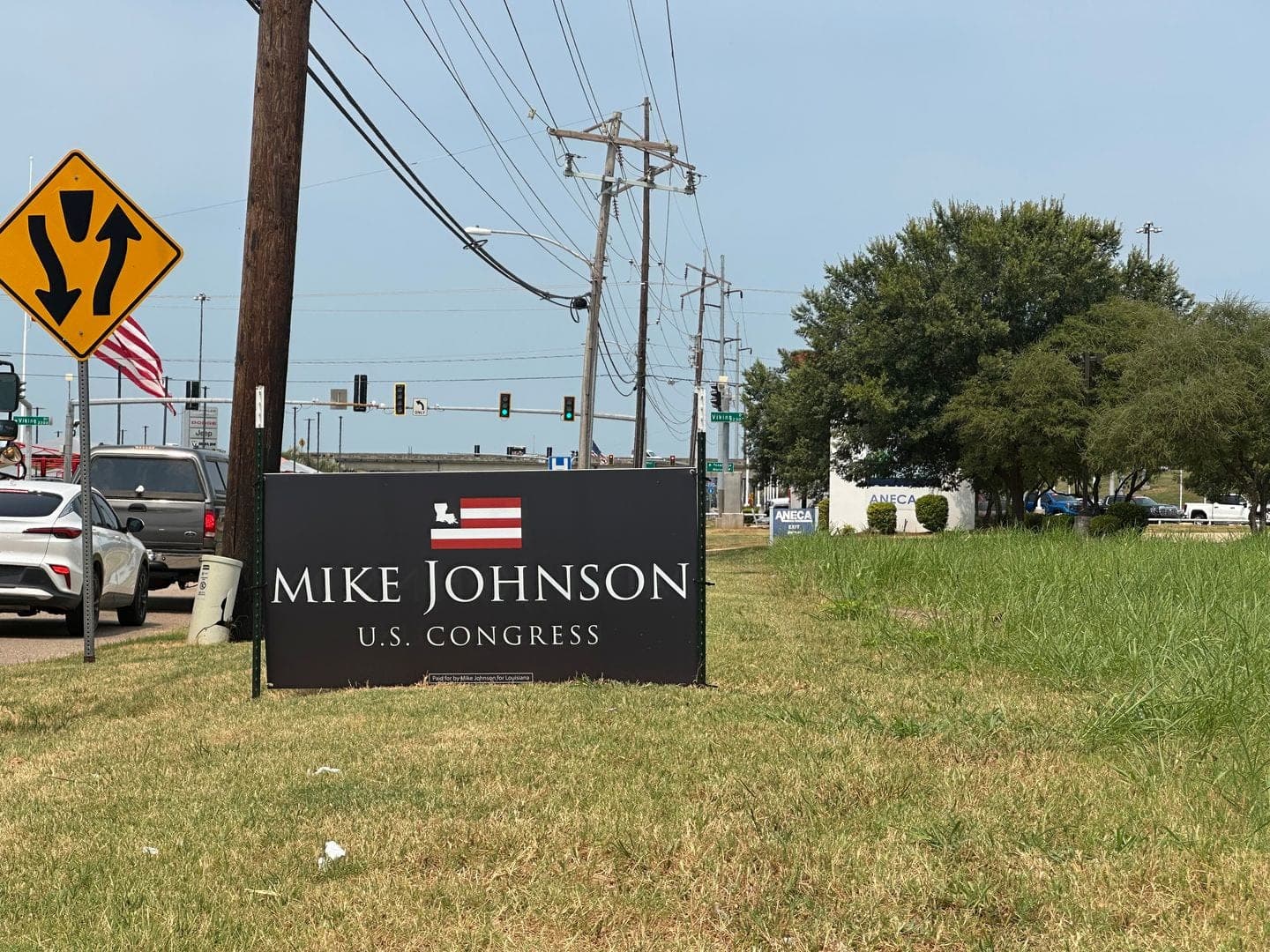
In GOP Speaker Mike Johnson's district, the political mood is mixed for the party in power
The article examines how voters in Johnson’s district view the tax benefits and assistance cuts in the bill he advanced.
SOURCE CHECK
TAP FOR WHYCredibility rates The Washington Times, where this article appeared. The other scores rate the article itself.
The Washington Times is an established news publisher, though its reputation and institutional standards are less comparable to those of the largest newspapers of record and wire services. The supplied metadata does not specify a source type or provide details about corrections practices.
- Track record — An established national publisher with a record of publishing reported news.
- Editorial standards — A recognizable newsroom, but the supplied material does not establish the strength of its standards or corrections practices.
- Transparency — The article has a named author and a specific publication date.
- Source type — Recorded as unknown, so it offers little additional basis for assessment.
The article combines interviews with affected residents and local officials, statements from Johnson and Cable, and figures attributed to the Tax Foundation and the Center on Budget and Policy Priorities. It presents both reported benefits and costs of the legislation, though it offers limited space for policy advocates or other experts to address the competing claims.
HOW WE SCORE ↗The reporting gives space to people who say the tax deductions helped as well as residents experiencing or anticipating food-assistance cuts, and includes Johnson’s defense of the policy. It provides figures from outside organizations but little direct response from advocates defending the SNAP or Medicaid changes.
- Counterarguments presented — Reports the bill’s stated benefits and Johnson’s justification alongside concerns about cuts and costs.
- Source diversity — Includes residents, local officials, a candidate, Johnson, and named policy organizations.
- Omitted context — Limited direct representation of policy advocates or other experts defending the assistance changes.
- Loaded language — The article generally attributes evaluative language to interviewees.
The article uses largely descriptive language and presents both tax benefits cited by supporters and assistance cuts and price concerns raised by residents. Its focus on local effects does not clearly signal a partisan political lean.
- Language tone — Mostly descriptive, with quoted opinions attributed to their speakers.
- Source selection — Includes supporters of the bill’s benefits as well as people affected by food-assistance cuts.
- Framing — Frames the story around varied local reactions rather than a partisan argument.
Original publisher not identified
This article credits another publisher, which ChamberLight has not identified, so the scores are The Washington Times's own.
Reporting from Mike Johnson’s Louisiana district finds voters weighing tax benefits from the Republicans’ “Big Beautiful Bill” against cuts to food assistance and Medicaid, amid concerns about prices and the war in Iran. Johnson is seeking another term, while Democratic opponent Conrad Cable says voters are upset about affordability and the SNAP cuts.
The article describes mixed reactions in Mike Johnson’s district to the Republicans’ “Big Beautiful Bill.” It reports that the measure provides tax deductions and other benefits while cutting SNAP and Medicaid, and says the Tax Foundation estimated Louisiana residents received an average $2,900 tax deduction this year. Johnson called the bill “real money for real people” and said Republicans were cutting wasteful spending and promoting economic growth.
Residents interviewed in the district described both benefits and hardship. A restaurant worker and a sheriff said the tipped-income and overtime deductions helped, while people using a community meal program described losing or worrying about SNAP benefits. The article also reports concerns about high prices and the war in Iran. Johnson’s Democratic opponent, Conrad Cable, said affordability and food-benefit cuts were among the issues he heard from voters.
Community verdict
13 VOTES
People in this story
SWIPE →House Speaker whose district and role in advancing the bill are central to the story
Democratic House candidate opposing Johnson

President discussed in connection with the district’s political loyalties and voters’ concerns
Part of a bigger story
8 OUTLETSOutlets agree that voters in Mike Johnson’s Louisiana district are weighing the GOP tax-and-spending law’s tax benefits against food-assistance cuts, while Johnson promotes the law. Center outlets emphasize the mixed local effects, with some also highlighting affordability concerns and the district’s political mood ahead of the election.
- ARTICLES
- 8
- OUTLETS
- 8
- AVG CRED
- 84
Discussion · 0
Loading comments…