Baby teeth reveal toxic metal risks to developing brains; Federal limits still don't exist
Krishnamoorthi says he is seeking momentum for federal limits and testing requirements for heavy metals in baby food.

SOURCE CHECK
TAP FOR WHYCredibility rates WACH, which republished this story. The other scores rate the article itself.
WACH is a local news broadcaster, and this report names its journalists and attributes scientific and policy claims to identifiable sources. The text does not provide links to the study or detailed documentation, limiting independent verification from the article alone.
- Source type — Established local-news broadcaster; regional reporting provides a reasonable institutional basis.
- Author attribution — Three journalists are named with the Spotlight on America team.
- Transparency — The report identifies the researcher, lawmaker and attorney whose statements it uses.
- Editorial standards — The article gives little detail on corrections practices or links to supporting documents.
The report draws on a named researcher, a member of Congress and an attorney, and describes the study’s findings and the proposed bill. It also identifies gaps in state and federal protections, but offers no response from the FDA or baby-food industry and provides limited detail for independently checking the study and reported product results.
HOW WE SCORE ↗The story provides scientific, legislative and state-level perspectives, but nearly all quoted sources favor stronger protections. It mentions industry lobbying and regulatory delays without including a response from the industry or FDA.
- Source diversity — Includes a researcher, a lawmaker and an attorney, but no opposing or regulatory spokesperson.
- Counterarguments presented — Notes potential costs and industry lobbying, but does not present the industry's explanation or position.
- Omitted context — Provides limited detail on FDA reasoning for delays and on the study's methods.
- Loaded language — Some emphatic phrasing appears, but the article generally attributes judgments to sources.
The report uses largely factual language and attributes the research and policy views to named sources. Its emphasis is on health risks and the case for federal limits, but it does not use overtly partisan framing.
- Language tone — Mostly descriptive wording, with claims attributed to speakers.
- Source selection — Sources chiefly support stronger protections; no industry or agency representative is quoted.
- Framing — Frames the issue around potential harm to children and the absence of universal limits, rather than party politics.
Republished
Republished from Thenationaldesk. The relationship between the two publishers has not been determined.
Not enough stories yet: 0 of 10.
New research using baby teeth identifies an early window when metal exposure may affect brain development. Rep. Raja Krishnamoorthi says he is pushing again for federal baby-food safety limits, testing and enforcement.
A study co-authored by Mount Sinai researcher Manish Arora used baby teeth to track exposure to metals including lead, copper and manganese. The researchers identified ages six to nine months as a particularly critical exposure window and said the timing of exposure can matter as much as the amount. The article reports that federal limits for arsenic and cadmium, expected in 2025, had not been established, while FDA deadlines had been delayed.
Rep. Raja Krishnamoorthi said he had introduced the Baby Food Safety Act for a third time. The bill would set limits for heavy metals in baby food, require testing and strengthen FDA enforcement, and Krishnamoorthi said he hoped it would be marked up. The report says several states have enacted testing and disclosure requirements; attorney Brent Wisner said some products now show lower metal levels. It also notes that state laws do not create a national standard and can have product loopholes.
Community verdict
22 VOTES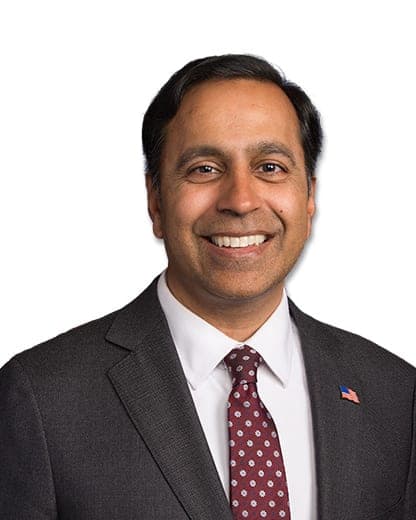
People in this story
Discussion · 0
Loading comments…