Rusty Red State Candidates With Rusty Values
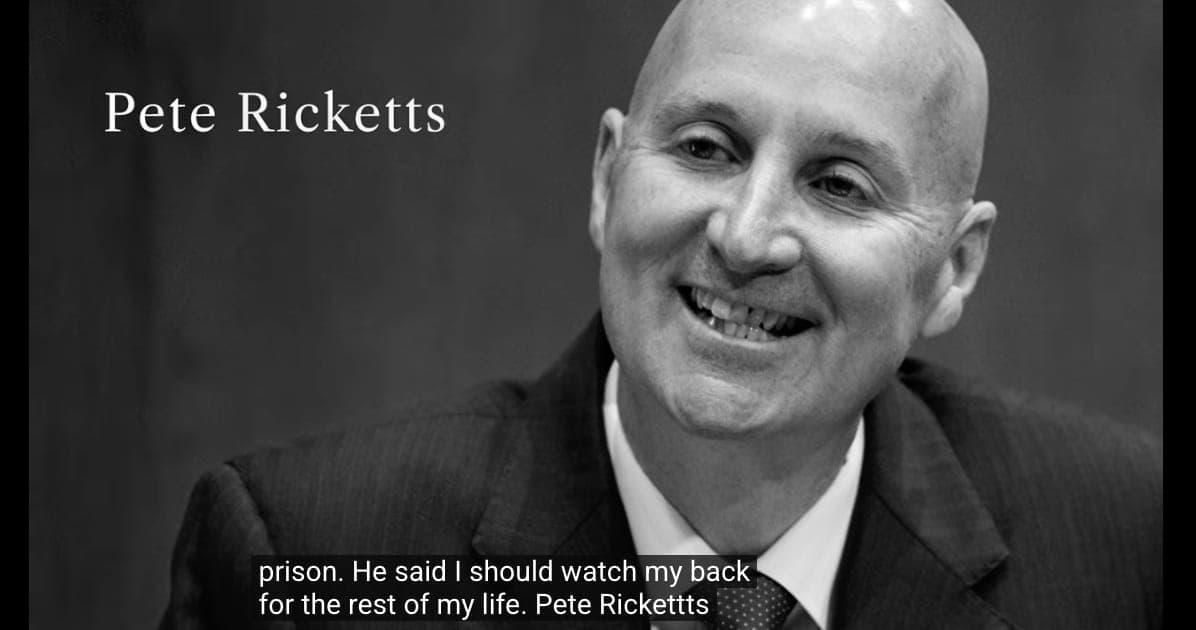
Marshall examines Ricketts’s deciding vote in favor of a pardon while he was governor.
SOURCE CHECK
TAP FOR WHYTPM is an established national outlet with a publisher rating of 71, which supports a solid institutional credibility assessment. This is an attributed opinion piece rather than a straight news report, and its author identifies an outside report as a source for background details.
- Track record — The site's rating of 71 across 27 stories indicates a generally credible record.
- Author attribution — The piece names Josh Marshall as its author.
- Source type — The publisher is recorded as national news, though this particular page is an opinion blog entry.
- Transparency — The author distinguishes his own impressions from details he says he checked against a Times report.
The author describes the ad’s central allegation, checks an important detail, and distinguishes the pardon’s effects from release from prison. The piece is opinionated and relies on a limited range of sources, with no response from Ricketts presented.
HOW WE SCORE ↗Marshall adds an important clarification that the pardon did not release Arias from prison and acknowledges uncertainty about his earlier release. However, the piece largely presents the episode through the critical ad and the author’s own judgment, without a response from Ricketts or a competing perspective.
- Counterarguments presented — No defense of Ricketts’s pardon vote or response from him is presented.
- Loaded language — The author uses evaluative language and rhetorical questions when discussing the decision.
- Source diversity — The account relies mainly on the ad and the author’s review, while citing a Times report for background.
- Opinion vs reporting — The piece is clearly an opinion entry and openly states the author’s judgments.
The piece is sharply critical of Ricketts’s pardon vote and uses that episode to question the records of Republican candidates in less-contested races. Its framing is openly evaluative rather than neutral, though it also corrects a potentially misleading impression about the pardon.
- Language tone — The author calls the ad brutal and questions Ricketts’s decision in moral and political terms.
- Framing — The story frames scrutiny of Republican candidates’ records as a consequence of more competitive elections.
- Omission — Ricketts’s explanation or response to the pardon vote is not included.
Josh Marshall argues that an ad highlighting Sen. Pete Ricketts’s deciding vote for a pardon has brought scrutiny to his record, while noting the pardon came years after the man’s release from prison. He connects the episode to how contested elections can expose candidates’ past actions.
Marshall describes an ad supporting Dan Osborn that criticizes Sen. Pete Ricketts for casting the deciding vote on a pardon board in favor of John Arias. He clarifies that Arias had already been released from prison years earlier; the pardon removed him from the sex offender registry and restored his right to own a firearm. Marshall says the ad did not claim the pardon freed Arias from prison.
Marshall links the episode to other scrutiny of Republican Sen. Roger Marshall’s record and argues that seriously contested elections can bring previously unexamined matters into view. He notes that Ricketts won his 2024 special election with 62% of the vote and says he saw no evidence that the pardon was raised then.
Community verdict
6 VOTES
People in this story
SWIPE →Senator and former governor whose deciding pardon-board vote is criticized
Democratic candidate in the 2024 special election

Senate candidate supported by the PAC behind the ad

Former senator whose seat Ricketts was appointed to fill

Senator cited as another example of a candidate whose past record received scrutiny
Discussion · 0
Loading comments…