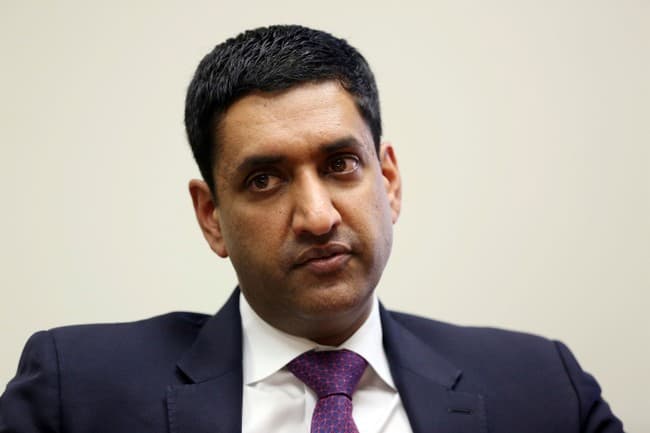
Rep. Ro Khanna Just Went All-In on Graham Platner
Platner campaigned with Khanna, discussed his past controversies, and won the Democratic primary.
SOURCE CHECK
TAP FOR WHYTownhall is an opinion-oriented publisher, and this page uses strongly partisan framing. The author is identified, but the article provides limited sourcing and context for serious allegations and its concluding judgment.
- Source type — Opinion-oriented outlet; partisan framing is prominent.
- Editorial standards — The text mixes reporting with a forceful, unsupported concluding judgment.
- Author attribution — A named author is identified.
- Transparency — Some claims are attributed to reports or statements, but the article offers little underlying evidence or detail.
The article gives a brief account of Khanna’s campaign appearance and includes statements from Khanna and Platner. It refers to serious allegations and a New York Times investigation without supplying much detail or a substantial response, and ends with an asserted judgment rather than evidence.
HOW WE SCORE ↗The article includes Khanna’s and Platner’s remarks, but its framing is largely critical and it offers little detail on the allegations, their sources, or responses to them. The author’s own conclusion is stated forcefully.
- Loaded language — The phrases “explain away” and “proven to be a lie” indicate a strongly judgmental presentation.
- Source diversity — The article quotes Khanna and Platner but includes no independent expert or other substantial perspective.
- Counterarguments presented — Platner’s explanation and Khanna’s rationale are included, but the allegations receive little contextual examination.
- Omitted context — The article provides little detail about the cited investigation or the subjects’ responses to specific allegations.
The article frames Khanna’s support and Platner’s campaign controversies in strongly critical terms, while its editor’s note explicitly presents Townhall as taking on the left. The language and selection of details convey a right-leaning perspective.
- Language tone — Phrases such as “explain away” and the claim that a promise “proven to be a lie” use a sharply critical tone.
- Framing — The article centers the apparent inconsistency between Khanna’s earlier red line and continued support.
- Headline — The headline presents Khanna as having gone “all-in” on Platner, framing the support as emphatic.
- Source selection — The article includes the candidates’ remarks but offers little countervailing context about the allegations or their responses.
Townhall reports that Rep. Ro Khanna campaigned with Graham Platner on the day Platner won Maine’s Democratic Senate primary, defending his support despite earlier calling certain allegations a red line. The article questions whether Khanna’s position can last through November.
The article says Khanna traveled to Maine on Tuesday to campaign with Platner, who won the primary with nearly 75 percent of the vote. Khanna cited Platner’s opposition to war and foreign interventions as reasons for his support. In a video, Platner discussed personal transformation and said the Democratic Party should become the anti-war party.
The article recounts allegations and controversies involving Platner and notes that Khanna had previously said assault, domestic violence, rape, or inappropriate relations with a minor would be a red line. It says Khanna continued to support Platner despite a reported New York Times investigation detailing allegations, and argues that a promise Platner reportedly made to Senate Democrats about no further credible allegations had already proved false.
Community verdict
12 VOTES
People in this story
SWIPE →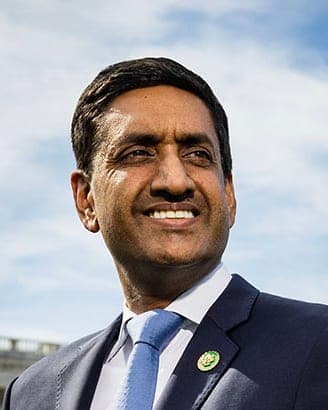
Representative who campaigned with and publicly supported Graham Platner
Khanna's version of this story ↗Discussion · 0
Loading comments…