Thurmond and Murkowski Won as Write-Ins. Is This Year's Senate Race Really the Same?
The article compares Murkowski’s 2010 write-in victory with Norman’s current circumstances.

SOURCE CHECK
TAP FOR WHYThe article has an identified author and makes specific claims about election totals and state law, but the publisher’s editorial standards, correction practices and reporting record are not established here. Its explicitly personal, argumentative approach also offers limited evidence of independent reporting.
- Source type — The source type is unknown, so there is little basis for assessing the publisher’s institutional standards.
- Editorial standards — The article cites vote totals and state code sections but does not establish a broader sourcing or verification process.
- Author attribution — An author is named, and the piece clearly presents the author’s own perspective.
The piece supplies precise election figures and cites South Carolina code provisions, and it acknowledges the case for a write-in vote. However, it is primarily the author’s argument, with no named outside sources or independent perspectives to corroborate its claims or assess the effort’s prospects.
HOW WE SCORE ↗The article gives reasons supporters might favor a write-in effort and says voters may reasonably choose differently, but the analysis is dominated by one author’s case that the historical comparisons have limits. It does not include outside advocates or independent analysis.
- Source diversity — No outside sources or opposing advocates are quoted.
- Opinion vs reporting — The article openly uses the author’s first-person judgments and advice about prudence.
- Counterarguments presented — The author acknowledges the historic precedent and the right of voters to support a write-in effort.
The author is skeptical that Norman’s write-in effort can replicate earlier victories, but the argument is about the circumstances of a specific election rather than a discernible left-right political framing.
- Framing — The article emphasizes differences that may hinder the write-in effort while acknowledging the historical examples and voters’ right to choose.
- Language tone — The prose is argumentative and personal but does not use distinctly partisan language.
- Source selection — The piece relies on the author’s analysis and does not present outside voices that would indicate a partisan source-selection pattern.
The article argues that Strom Thurmond’s and Lisa Murkowski’s write-in victories do not make Ralph Norman’s current South Carolina write-in effort directly comparable. It points to differences in the primary results, South Carolina law, Norman’s support for Darline Graham and the geographic distribution of votes.
The author recounts that Thurmond won a 1954 write-in Senate campaign after party officials selected a replacement nominee without holding another primary, while Murkowski won as a write-in after narrowly losing Alaska’s 2010 Republican primary. The article contrasts those circumstances with South Carolina’s special Republican runoff, which Darline Graham won over Norman by 18,069 votes.
The article says South Carolina law bars a defeated primary candidate from campaigning as a write-in for an office where the party has a nominee, and reports that Norman congratulated Graham and said he would support the Republican nominee. The author also questions whether an independent write-in effort can attract enough support outside Norman’s strongest region, while saying voters may still reach different conclusions about what to do.
Community verdict
VOTING CLOSED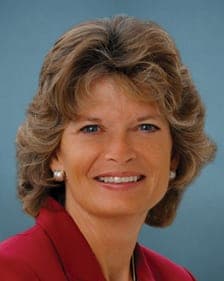
No good or bad look here
This story reports what happened without casting Murkowski in a good or bad light, so readers don’t rate it and it doesn’t count toward Murkowski’s record.
People in this story
SWIPE →Alaska senator and historical comparison for South Carolina’s write-in effort
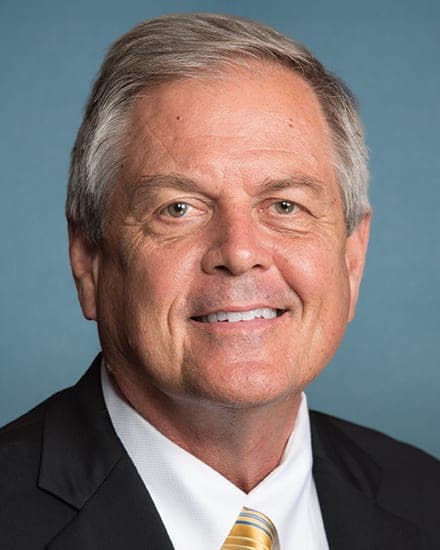
South Carolina representative and subject of an independent write-in effort for the Senate
Norman's version of this story ↗
Republican nominee whose death prompted a special South Carolina primary

Republican Senate nominee in South Carolina
Discussion · 0
Loading comments…