In Cornyn's enormous loss, proof of Trump's hold over GOP base
Cornyn’s loss in the Texas runoff is presented as a striking sign of the influence of Trump-aligned primary voters.

SOURCE CHECK
TAP FOR WHYCredibility rates The Seattle Times, which republished this story. The other scores rate the article itself.
The page identifies The New York Times as the original publisher, indicating that the reporting comes from an established news organization. The Seattle Times is a recognized regional newsroom, and the article has a named author and clear attribution.
- Track record — The article identifies The New York Times as its original publisher, an established national news organization.
- Editorial standards — The Seattle Times is an established regional newsroom; the article is presented as reported news.
- Author attribution — A named reporter is credited.
- Transparency — The page explicitly identifies the original publisher and links readers to it.
The story provides detailed election results and comparisons, attributes data to an election-results provider, and includes a named political consultant’s caution about interpreting the runoff. It offers limited direct response from Trump or Paxton, and much of its explanation centers on the same electoral trend.
HOW WE SCORE ↗The article grounds its account in election results and includes Cornyn’s remarks and a consultant’s caution about interpreting the outcome. It does not include direct responses from Trump or Paxton, leaving some perspectives on the central framing absent.
- Source diversity — Election data, Cornyn’s remarks, and a Republican consultant provide more than one source of information, though direct comment from Trump and Paxton is absent.
- Counterarguments presented — A consultant cautions that the runoff result and immediate polling may not predict November.
- Omitted context — The article does not include direct responses from Trump or Paxton to its account of their roles and prospects.
- Loaded language — Some vivid descriptions of the defeat appear, but the piece remains primarily a results report.
The article uses mostly straightforward election reporting and attributes its interpretation and forecasts. Its emphasis on Trump’s influence does not, by itself, establish a partisan lean.
- Language tone — Mostly descriptive language reports results and campaign developments, with some vivid but not overtly partisan phrasing.
- Source selection — The story includes election data, Cornyn’s concession remarks, and a Republican consultant’s caution about forecasting the general election.
- Framing — It frames the runoff as evidence of Trump’s influence, while also noting uncertainty about what the result means for November.
Republished with credit
Republished from The New York Times, with credit to the original publisher.
91 stories · 94–95 · updated Oct 6, 2026
This is The New York Times's own score, and this article is credited to The New York Times. The host score in the Source Check is The Seattle Times's.
Ken Paxton defeated Sen. John Cornyn by nearly 28 points in Texas’s Republican Senate runoff, a result the article presents as evidence of President Donald Trump’s continuing influence over GOP primary voters. The outcome also revived Democrats’ hopes for the general election.
Ken Paxton defeated John Cornyn by nearly 28 percentage points in the Texas Republican Senate runoff, despite being outspent. The article calls it the worst showing for a sitting senator in a two-person primary or runoff since 1974, citing Decision Desk HQ. It describes the result as evidence of Trump’s influence among Republican primary voters and notes that Trump endorsed Paxton in the campaign’s final days.
The article also points to Trump-backed primary defeats for Bill Cassidy and Thomas Massie. Paxton’s win has revived Democrats’ hopes of making Texas competitive, especially given James Talarico’s fundraising success. A Texas Republican consultant cautioned that the runoff result and immediate post-primary polling might not predict the November election.
Community verdict
VOTING CLOSED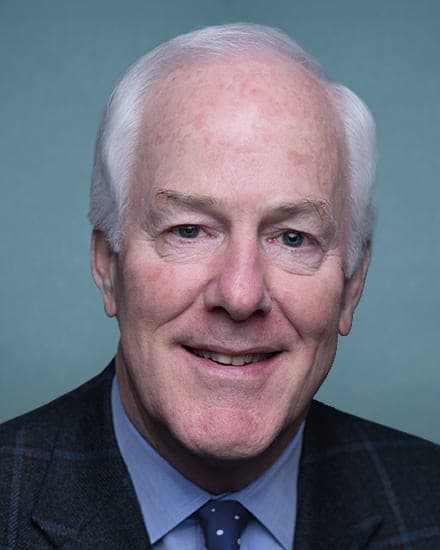
No good or bad look here
This story reports what happened without casting Cornyn in a good or bad light, so readers don’t rate it and it doesn’t count toward Cornyn’s record.
People in this story
SWIPE →Incumbent senator defeated in the Texas Republican Senate runoff

Republican Senate candidate who defeated Cornyn in the Texas runoff
Paxton's version of this story ↗
President whose endorsements and influence are central to the article’s account of Republican primary results
Trump's version of this story ↗
Democratic Senate candidate whose campaign released an ad about Paxton

Kentucky representative defeated in a House primary after Trump opposed him

Louisiana senator who failed to reach the runoff in his reelection bid
Part of a bigger story
37 OUTLETSOutlets across the spectrum agree that Ken Paxton defeated John Cornyn in the Texas Republican Senate primary runoff, making Paxton the party’s nominee for the general election. Left-leaning outlets cast the result as evidence of Trump’s influence and a warning about risks for Republicans. Center outlets focus on Cornyn’s unsuccessful effort to win Trump’s backing and what the result signals about party influence and unity. Right-leaning outlets present it as a grassroots rebuke of establishment Republicans and a victory for Trump-aligned politics.
- ARTICLES
- 40
- OUTLETS
- 37
- AVG CRED
- 68
- Attack of the Fanboy · John Cornyn has shared a fable of frog and scorpion after Texas primary loss, and it might ring true for many of his GOP colleagues
- Yahoo News · After Cornyn's loss, Trump's grip on the Senate is looser than ever
- redstate.com · Grassroots Political Advocacy Fueled the Power of the Vote in Texas
Discussion · 0
Loading comments…