This House bill would enable parents to enforce screen time limits on their kids' devices
Whitesides introduced a bipartisan bill to help parents enforce screen-time limits across their children’s devices.

SOURCE CHECK
TAP FOR WHYCredibility rates Mercurynews, which republished this story. The other scores rate the article itself.
The Mercury News is an established regional newsroom, and this article has an identified author and reports a congressional proposal with attributed statements and named sources. The short report relies substantially on the bill sponsor’s account and offers little independent scrutiny.
- Source type — Established local-news publisher with regional reporting capacity.
- Editorial standards — The article uses attributed statements and identifies supporting sources, though it is brief.
- Author attribution — A named author is credited.
The report clearly explains the bill’s proposed mechanism and privacy safeguards, attributes the sponsor’s statements, and provides public-health context from named sources. It does not include independent experts or opposing views, so the proposal’s potential drawbacks and feasibility are not explored.
HOW WE SCORE ↗The article gives a clear account of the bill and its sponsor’s rationale, and includes some public-health context. It offers no independent assessment of the proposal or counterarguments about its costs, privacy risks, or implementation.
- Counterarguments presented — No criticism or alternative view of the bill is included.
- Source diversity — The sponsor is the only quoted political source; public-health context comes from cited institutions.
- Opinion vs reporting — Written as a news report, without overt opinion.
The article presents the bill and its sponsor’s rationale in straightforward language, without discernible partisan framing. It does not include critics or alternative perspectives, but that omission alone does not establish a political lean.
- Language tone — Mostly descriptive, with no conspicuously partisan wording.
- Source selection — Includes the sponsor’s statement and public-health sources, but no critics of the proposal.
- Framing — Explains the practical problem the bill addresses and summarizes its provisions.
Republished
Republished from Dailynews. The relationship between the two publishers has not been determined.
Not enough stories yet: 1 of 10.
Rep. George Whitesides introduced a bipartisan bill that would have federal standards developed to help parents enforce screen-time limits across children’s devices. It would also restrict data collection and prohibit a centralized database tracking children’s activity.
Whitesides introduced the TOTAL Screen Time Act, which would direct the National Institute of Standards and Technology to convene experts and stakeholders to develop a framework for interoperable products. The framework is intended to let parents enforce screen-time limits across devices, rather than having children switch to another device when they reach a limit. The bill would also require privacy and cybersecurity protections, including limits on data exchanged and a ban on a centralized database tracking children’s activity.
Whitesides said the bill leaves decisions about appropriate screen time to parents. The article cites a U.S. Surgeon General advisory about potential harms from social media use by young people and reports that the American Psychological Association found frequent teen social-media users report poor mental health at higher rates. The bill is co-sponsored by Reps. Pat Harrigan, Mike Haridopolos and April McClain and was referred to the House Committee on Science, Space, and Technology.
Community verdict
12 VOTES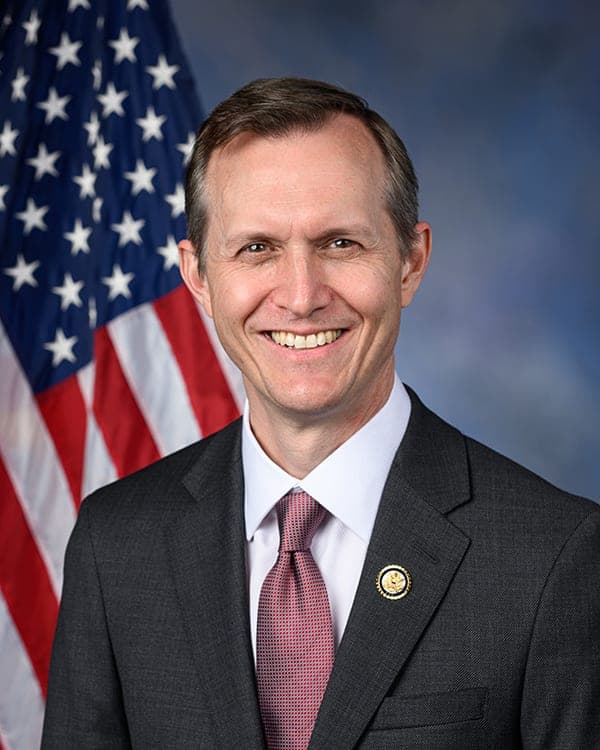
People in this story
SWIPE →
Co-sponsor of the TOTAL Screen Time Act

Co-sponsor of the TOTAL Screen Time Act

Co-sponsor of the TOTAL Screen Time Act
Discussion · 0
Loading comments…