Mike Steger Explains Why U.S-Canada Trade Conflict Represents Much More
Steger’s outline frames the U.S.-Canada trade conflict as part of China’s effort to expand its auto industry.

SOURCE CHECK
TAP FOR WHYThe Last Refuge is a blog with an openly opinionated framing, and this post has no named author. It makes consequential trade and economic claims without showing supporting documents or a range of independent sources.
- Source type — A blog source warrants a lower institutional-credibility baseline than an established newsroom.
- Editorial standards — The post uses strong advocacy language and offers little visible evidence for its claims.
- Author attribution — No individual author is identified.
Quality of the journalism in this article itself — sourcing, evidence, balance — independent of the host site's reputation.
HOW WE SCORE ↗The post advances one case for tariffs and restricting trade access, with no sustained presentation of competing arguments or independent perspectives. Canadian Prime Minister Mark Carney’s position is briefly mentioned but not explained in depth.
- Counterarguments presented — No developed counterargument to the post’s tariff and trade claims appears.
- Source diversity — The post largely relies on its own claims and Steger’s outline rather than a range of sources.
- Loaded language — Uses emphatic and evaluative phrasing to reinforce its warning.
The post strongly favors protective trade measures and President Trump’s approach, while describing Chinese and globalist trade policies as threats. Its framing and language express a clear right-leaning perspective.
- Language tone — Uses approving and emphatic language for its preferred position, including calling tariffs necessary.
- Framing — Frames Chinese auto expansion and Canadian trade policy primarily as threats to U.S. manufacturing.
- Source selection — Centers Steger’s argument and does not develop opposing trade-policy views.
A Last Refuge post presents Mike Steger’s argument that the U.S.-Canada trade conflict is tied to China’s efforts to expand its auto industry. It supports tariffs and warns that ending USMCA could reshape Canadian auto manufacturing.
The post introduces Promethean Action PAC’s Mike Steger and his outline of the U.S.-Canada trade conflict. It argues that China has gained ground in Europe’s auto market, citing exports of 1.2 million Chinese vehicles to Europe and 200,000 European vehicles to China in 2025. The post contends that Canada could become an entry point for Chinese automakers into North America.
The post argues that President Trump should protect U.S. manufacturing with tariffs, including the Section 301 steel and aluminum tariffs and Section 338 tariffs. It also lays out a hypothetical in which ending USMCA leads Canadian auto plants to close and Chinese companies to buy them, while noting that Toyota and Honda have told Canadian trade officials they would not maintain plants in Canada without U.S. market access under USMCA.
Community verdict
VOTING CLOSEDNo good or bad look here
This story reports what happened without casting Steger in a good or bad light, so readers don’t rate it and it doesn’t count toward Steger’s record.
People in this story
SWIPE →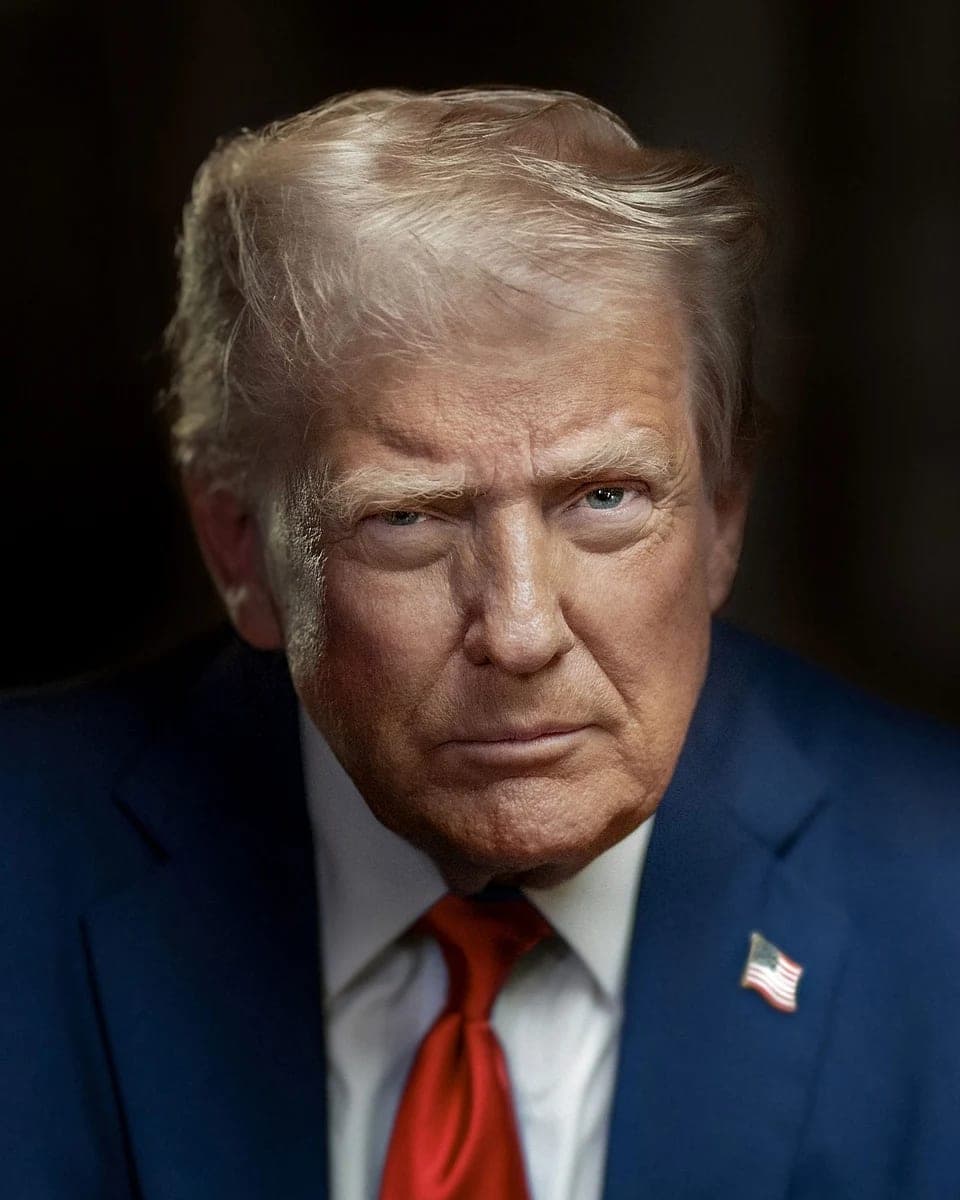
President whose trade policies the post supports
Discussion · 0
Loading comments…