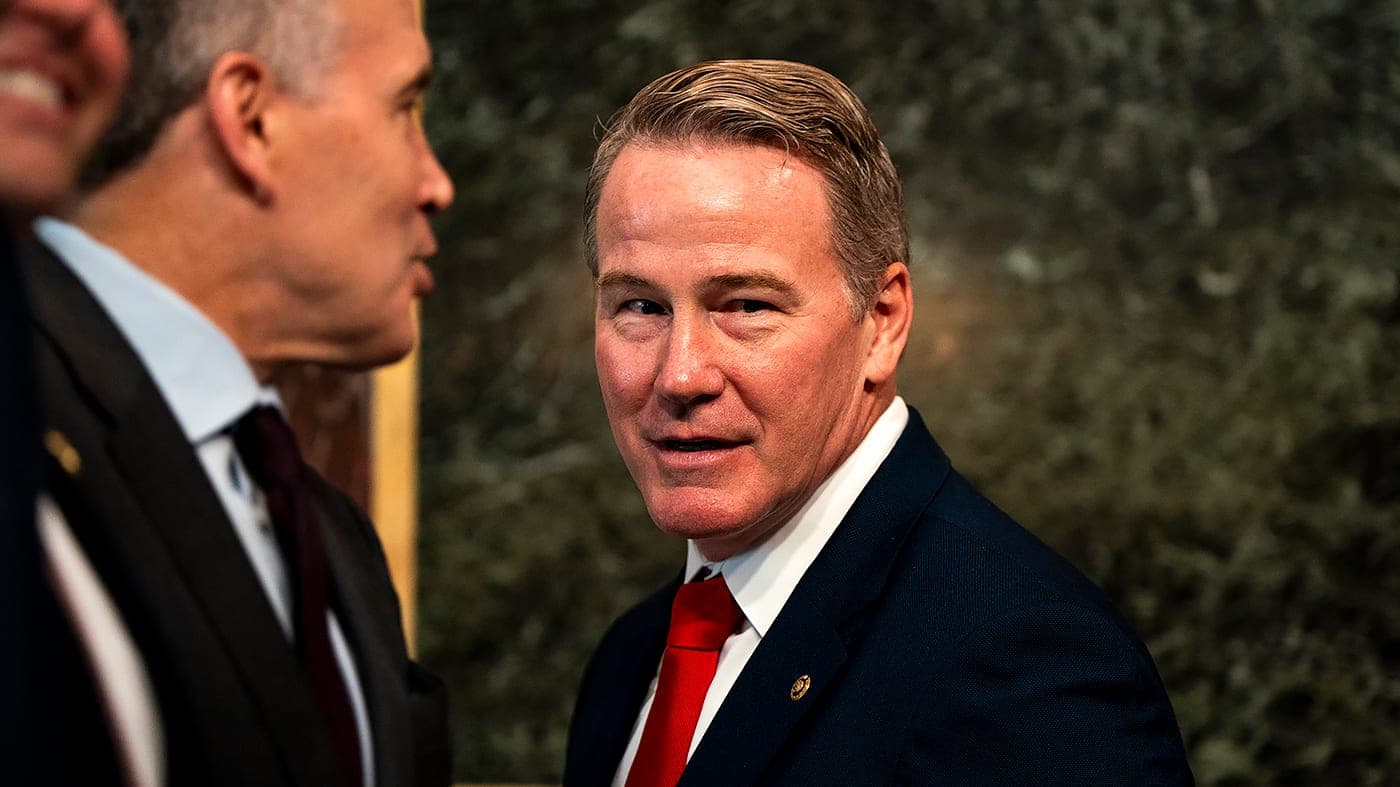
What would Jon Husted’s data center bill actually do?
Husted’s bill would require states and some utilities to consider standards for data-center electricity costs.
SOURCE CHECK
TAP FOR WHYThe Hill is an established national news outlet with editorial reporting, and its publisher rating supports a strong credibility assessment. The article names its author and attributes quoted views to identifiable sources.
- Track record — The publisher's rating of 79 across 151 stories indicates a generally strong record.
- Source type — An established national news outlet is a strong institutional source.
- Author attribution — The article names its reporter and identifies quoted sources.
The article explains what the bill would and would not require and includes perspectives from advocates, a former regulator, a senator criticizing the measure, and Husted. It is concise and offers limited detail on the bill’s prospects or the opposing senators’ reasoning.
HOW WE SCORE ↗The article presents the bill’s possible benefits alongside concerns about redundancy and weak requirements, as well as views from both Husted and a Senate critic. It provides limited space for the range of Senate opposition.
- Counterarguments presented — The article includes both arguments that the bill could prompt action and criticisms that it may be insufficient.
- Source diversity — Sources include advocates, a former regulator, and senators on differing sides of the bill.
- Omitted context — The article gives little detail on the substance or breadth of Senate opposition.
The article uses restrained language and presents both the potential value of the bill and criticism of its limited requirements. Its framing does not show a discernible partisan lean.
- Language tone — The wording is primarily descriptive and avoids partisan characterization.
- Source selection — The story includes supportive and critical assessments of the measure.
- Framing — The article focuses on the bill's likely effects and limitations rather than partisan conflict.
Jon Husted’s Ratepayer Protection Act passed the House 417-3, but it would only require states and some utilities to consider standards making data centers pay for added electricity costs. The article says it is unclear whether the measure would meaningfully lower those costs.
Husted’s Ratepayer Protection Act would require states and some electric utilities to consider standards for making data centers pay for additional costs caused by their power demand. It would not require states or non-regulated utilities to adopt such standards, and they would have two years to decide. The House passed the legislation 417-3.
Experts cited by The Hill said the bill could encourage states to address the issue, though former FERC commissioner Allison Clements said some requirements could be redundant and the measure was not sufficient for the challenge. Sen. John Hickenlooper criticized the bill as lacking teeth, while Husted said it would help prevent families from paying for data-center infrastructure. The article also notes Husted is in a close Senate race against former Sen. Sherrod Brown.
Community verdict
19 VOTES
People in this story
SWIPE →
Senator who criticized the bill

Former senator and Husted’s Senate opponent
Part of a bigger story
11 OUTLETSHusted urged Senate Republicans to pursue a vote on his data-center electricity-cost bill. The bill would have states or utilities consider standards for data centers’ added power costs. Left-leaning outlets portray the vote as a politically useful step with limited practical effect. Center outlets place it in a pre-midterm affordability push while examining the bill’s uncertain reach. Right-leaning outlets emphasize its potential value to Husted’s campaign and Democrats’ view that it is too weak.
- ARTICLES
- 11
- OUTLETS
- 11
- AVG CRED
- 80

Discussion · 0
Loading comments…