House Passes Reconciliation 3.0 And Insider Trading Ban, Sends GOP Priorities To Senate
Mike Johnson advanced two Republican priorities through the House before the August recess.

SOURCE CHECK
TAP FOR WHYThe Daily Caller is an established, openly right-leaning outlet that publishes attributed reporting, but the article relies substantially on other outlets and social media for its sourcing. The article provides an author byline and identifies several sources, though the material shown offers limited evidence of original reporting or correction practices.
- Source type — A national news outlet with a clear partisan orientation; this is a modest constraint on institutional credibility.
- Author attribution — The article names an author and attributes several claims and quotations to other outlets or named speakers.
- Editorial standards — The article is presented as news and attributes claims, but relies on a mixture of secondary reporting and social media material.
The article reports vote tallies and quotes lawmakers, but many details are attributed to other outlets or social media posts. It includes Republican dissent and Thune’s response, but little direct sourcing or Democratic perspective.
HOW WE SCORE ↗The article reports dissent from several Republicans and the Senate majority leader’s different approach, but gives little perspective from Democrats or other supporters and opponents of the measures.
- Source diversity — Most cited views are from Republican officials or outlets; Democratic perspectives are absent.
- Counterarguments presented — Republican lawmakers’ concerns about the reconciliation framework and Thune’s opposition to taking it up are included.
- Opinion vs reporting — The piece is written as news and generally attributes claims, though some framing favors the House effort.
The article emphasizes Republican legislative priorities and describes the framework as an ambitious move, while also reporting Republican opposition and Thune’s preference for a different Senate approach. Its language and framing suggest a modest rightward tilt rather than overt advocacy.
- Framing — The article foregrounds Republican priorities and describes the House action as an ambitious move.
- Source selection — It includes GOP critics and Thune’s contrasting position but little Democratic perspective.
- Language tone — Mostly reportorial language, with some favorable framing of the House effort.
The House passed a $95 billion budget reconciliation framework and the Stop Insider Trading Act, sending both to the Senate. The votes advanced Republican priorities but drew opposition from several House Republicans, while John Thune said he would not take up the House framework.
The House approved a roughly $95 billion reconciliation framework by a 216-214 vote. The article says it includes Pentagon funding, agricultural aid and resources to encourage states to adopt election-related measures tied to the SAVE America Act. Kevin Kiley, Thomas Massie and Warren Davidson voted against it; Kiley said he was skeptical of using reconciliation for defense funding.
The House also passed the Stop Insider Trading Act, which the article says includes a voter ID provision, by a 232-198 vote. Senate Majority Leader John Thune said he would not take up the House budget resolution and preferred to work with Democrats on a Senate version. He also praised Susan Collins’ work on a bipartisan continuing resolution.
Community verdict
32 VOTES
People in this story
SWIPE →Speaker who advanced the House reconciliation framework and insider trading bill
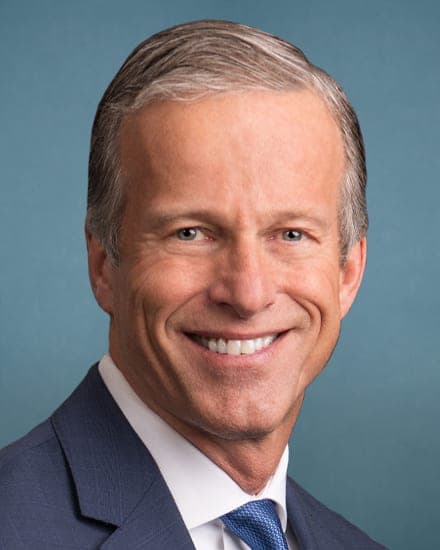
Senate majority leader responding to the House budget framework
Thune's version of this story ↗
Senate Appropriations Committee chair credited with work on a bipartisan continuing resolution

Representative who opposed the reconciliation framework

Representative who voted against the reconciliation framework

Representative who voted against the reconciliation framework
Part of a bigger story
17 OUTLETSThe House passed a $95 billion Republican-only budget resolution that Speaker Mike Johnson advanced, aimed at funding the Iran war and other Trump priorities. Its path in the Senate remains uncertain. Left-leaning outlets focus on disputes over whether the package's election provisions actually advance the SAVE Act and present Johnson's description as contested by Republican critics. Center outlets emphasize the narrow House passage, Republican divisions and uncertainty about Senate action. Right-leaning outlets frame the vote as progress for Republican priorities, especially election measures, while some also stress conflict with Senate Republicans.
- ARTICLES
- 23
- OUTLETS
- 17
- AVG CRED
- 71

Discussion · 0
Loading comments…