Ted Cruz Is Getting His Way With a New Law. Democrats Are Letting Him. No One Wants to Admit What It Does.
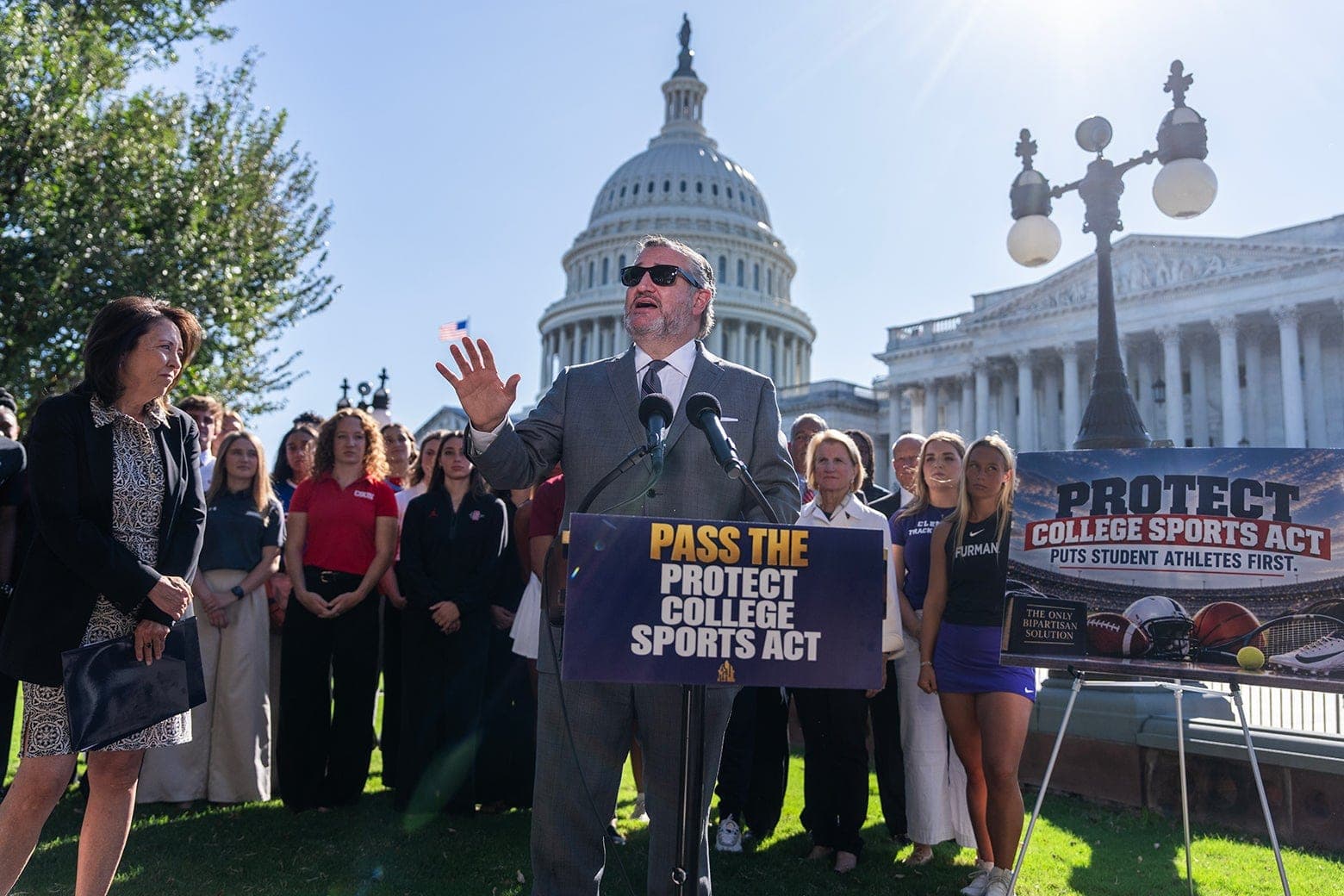
Cruz is advancing the Protect College Sports Act, which the article argues would constrain athlete compensation and transfers.
SOURCE CHECK
TAP FOR WHYSlate is an established digital publication with identifiable authors, but this is an explicitly opinion-driven article rather than independent straight reporting. The publisher’s credibility is stronger than that of an opinion-first blog, though the article’s argumentative format warrants a moderate score.
- Source type — An established publication, but the page is classified as opinion.
- Author attribution — The article names its author.
- Editorial standards — Slate has an identifiable editorial operation; this article’s advocacy-style argument is distinct from straight reporting.
The article presents specific bill provisions and figures, including data attributed to the NCAA, and identifies supporters and an institutional opponent. It is openly opinionated, relies on a narrow range of perspectives, and offers limited direct evidence or response from the bill’s supporters on the disputed effects.
HOW WE SCORE ↗The piece is an opinion argument against the bill. It acknowledges the sustainability and competitive-balance arguments made for it, but largely rejects those arguments and gives little space to supporters’ responses or evidence.
- Opinion vs reporting — The article is explicitly an opinion piece and advances a clear argument against the bill.
- Counterarguments presented — It describes proponents’ sustainability rationale and concerns about competitive balance, then disputes them.
- Source diversity — The discussion relies mainly on the author’s analysis, with limited attributed viewpoints from supporters or opponents.
- Loaded language — Uses forceful evaluative language about the legislation and its rationale.
The article uses strongly critical language and frames the bill through athlete compensation, labor rights, and racial disparities. Its framing and choice of emphasis indicate a pronounced left-leaning perspective.
- Language tone — Uses emphatic judgments such as describing the bill as “evil” and its sales pitch as a “central lie.”
- Framing — Centers the bill’s effects on athlete pay, worker protections, and racial distribution of wealth.
- Source selection — Cites the NAACP as an opponent but includes little direct argument from the bill’s supporters.
A Slate opinion argues that the Senate-passed Protect College Sports Act would restrict college athletes’ compensation and transfer options while granting the NCAA antitrust protection. It criticizes Ted Cruz and Maria Cantwell for backing the bill and notes that the House may consider it after the midterm elections.
The article reports that the Protect College Sports Act passed the Senate with 77 votes and says the House may take it up after the midterm elections. The author argues that the bill would constrain athlete compensation and transfers, while giving the NCAA authority to enforce payment rules with antitrust protection. The article also describes a proposed limit on coach salaries and provisions affecting conference media rights and athlete representation on NCAA committees.
The author characterizes the bill as benefiting schools and coaches at players’ expense, and argues that its effects could hinder athletes’ ability to organize as employees. The article cites NCAA data on racial representation in college sports and identifies the NAACP as a prominent opponent. It says Sen. Cory Booker proposed an amendment to limit coach salaries to $5 million a year, but that it failed.
Community verdict
8 VOTES
People in this story
SWIPE →
President who is eager to sign the bill

Senator backing the Protect College Sports Act

Senator who proposed an amendment to limit coaches’ salaries
Part of a bigger story
20 OUTLETSOutlets agree that the Senate passed the Protect College Sports Act 77-22 and that Ted Cruz, a co-author, backed its passage. Left-leaning outlets cast the bill as favoring college-sports institutions at athletes’ expense, stressing limits on pay and transfers and expanded NCAA power. Center outlets focus on the vote and uncertain House path while presenting supporters’ arguments for stability alongside critics’ concerns about athletes’ rights and compensation. Right-leaning outlets present passage as a step toward order and federal rules for college sports, emphasizing supporters’ case.
- ARTICLES
- 22
- OUTLETS
- 20
- AVG CRED
- 72


Discussion · 0
Loading comments…