Ad misleads on Susan Collins' Epstein files votes
The article examines whether a campaign ad accurately characterized Collins’ votes and her position on releasing Epstein files.
SOURCE CHECK
TAP FOR WHYPolitiFact is an established fact-checking outlet, and this article identifies its author, cites other reporting and documents its attempts to obtain comment. The page does not provide a publisher rating or visible correction-policy details, so the score reflects the outlet’s established reporting rather than page-specific evidence of its correction practices.
- Source type — Established fact-checking newsroom with a record of reporting and evaluating public claims.
- Transparency — Identifies sources, quotes spokespeople and explains the basis for its conclusion.
- Author attribution — The article names its author.
- Correction history — No correction information is visible in the supplied article text.
The article compares the ad’s claims with Collins’ voting record and statements, cites reporting by other outlets, and includes responses from the ad’s spokesperson and a spokesperson for Schwarzman’s company. Its evidence is specific, though the article does not include a response from Collins or her PAC.
HOW WE SCORE ↗The article presents the ad’s claims, Collins’ stated rationale and voting history, and responses from both the ad’s side and Schwarzman’s company. It does not include a response from Collins or her PAC, leaving some relevant perspectives unrepresented.
- Counterarguments presented — Includes the ad’s spokesperson’s explanation of the business-partner claim and Collins’ stated reason for opposing the amendment.
- Source diversity — Uses multiple outlets and comments from representatives on opposing sides of the donor claim.
- Omitted context — No response from Collins or her PAC is included in the supplied text.
- Opinion vs reporting — Written as a reported fact-check rather than an opinion piece.
The article uses a fact-checking format, presents the ad’s claims alongside voting and donation details, and explains why it reached its rating. Its critical conclusion is tied to the evidence presented rather than to discernible partisan framing.
- Language tone — Mostly factual language; the explicit rating is supported by the article’s findings.
- Source selection — Includes statements from the ad’s spokesperson and a corporate spokesperson, plus reporting from other outlets.
- Framing — Organized around evaluating specific claims made in a campaign ad.
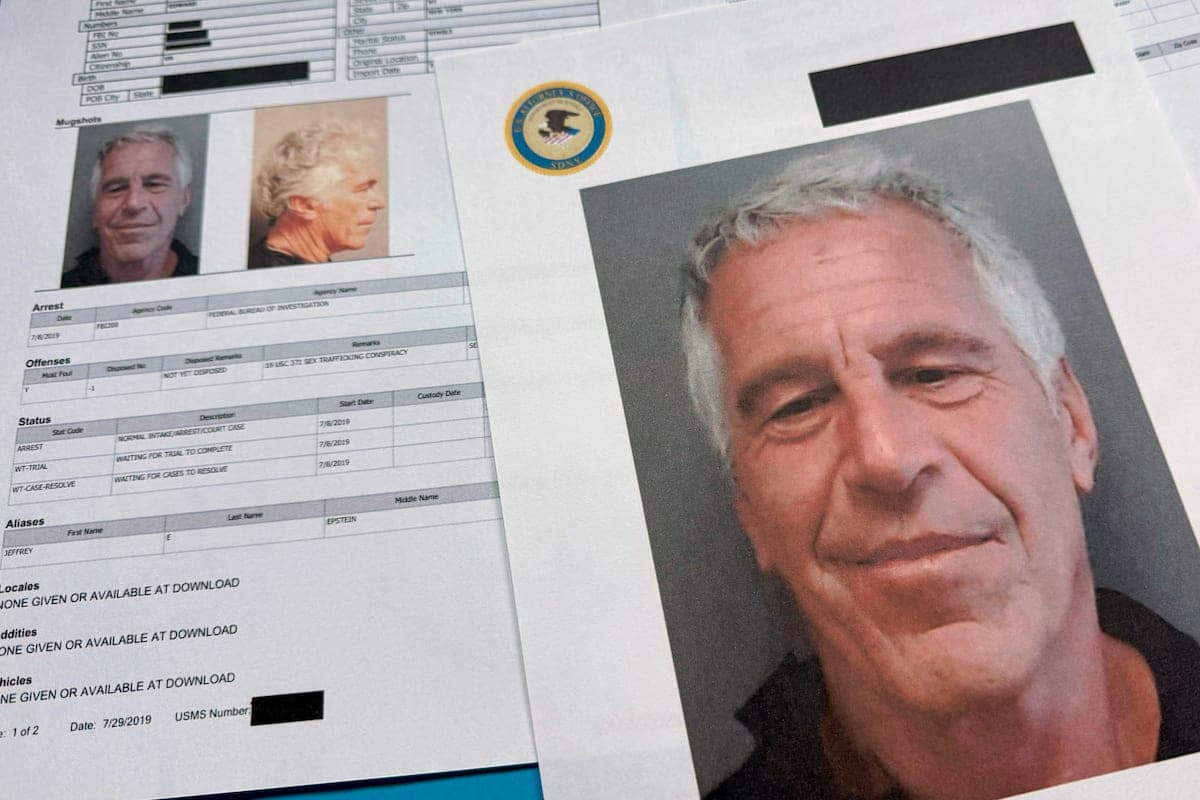
PolitiFact found that a WinSenate ad misrepresented Susan Collins’ votes on releasing Jeffrey Epstein files and its claim that a donor to a pro-Collins PAC was Epstein’s business partner. It rated the ad’s statement false.
A WinSenate ad accused Sen. Susan Collins of voting to cover up Epstein files and linked a $3 million donor to a pro-Collins PAC to Epstein as a business partner. PolitiFact said Collins voted to block an amendment attached to a defense bill, but had supported a similar provision in a funding bill and praised the later passage of the Epstein Files Transparency Act.
The article identified the donor as Blackstone CEO Stephen Schwarzman and said it found no evidence he and Epstein were business partners; both had been early members of the same club. PolitiFact rated the ad’s statement false.
Community verdict
13 VOTES
People in this story
SWIPE →Senator whose voting record and statements are examined in a fact-check of a campaign ad.

President shown in the ad and later described as directing lawmakers to pass a measure releasing the files.

Senator who proposed a committee amendment to preserve Epstein files and report findings to lawmakers.

Democratic Senate candidate identified as Collins’ opponent in the upcoming election.
Part of a bigger story
2 OUTLETS- ARTICLES
- 3
- OUTLETS
- 2
- AVG CRED
- 82
Discussion · 0
Loading comments…