Rand Paul releases Anthony Fauci's COVID diary entries ahead of hearing : NPR
Rand Paul released pages he described as Fauci’s diary entries and renewed his accusations ahead of a committee hearing.
SOURCE CHECK
TAP FOR WHYNPR is an established national news organization, and the report identifies its reporter and includes named sources and attributed claims. The page is an NPR transcript, with no indication that the reporting was reproduced from another publisher.
- Track record — Established national news organization with a substantial record of original reporting.
- Editorial standards — The report distinguishes attributed claims from established facts and includes caveats about scientific uncertainty.
- Author attribution — The reporter and interview participants are identified.
The report uses named scientific sources, describes the competing origin theories and attributes the key accusations to Paul and Fauci’s spokesperson. It notes that NPR received no response from Paul and that Fauci did not respond directly, while offering limited detail about how the diary pages were obtained.
HOW WE SCORE ↗The report gives context on the scientific debate, includes a scientist who says early evidence was insufficient and another who says later evidence favors natural origin, and reports Fauci’s spokesperson’s response. Paul’s account is presented, but the story could not establish how he obtained the pages, and Fauci did not comment directly.
- Source diversity — Includes two scientific perspectives alongside statements from Paul and Fauci’s spokesperson.
- Counterarguments presented — The report includes scientific views that challenge Paul’s implication of a cover-up and notes continuing uncertainty.
- Omitted context — The report says the source of the diary pages was unclear and that Paul’s office had not answered NPR’s inquiry.
The report uses restrained language and presents Paul’s accusations alongside scientific perspectives and Fauci’s spokesperson’s response. It does not clearly endorse either side.
- Language tone — Mostly neutral wording, with charged language presented as attributed quotations.
- Source selection — Includes views from scientists as well as statements from Paul and Fauci’s spokesperson.
- Framing — Frames the release as a renewed dispute and explains both scientific uncertainty and the competing claims.
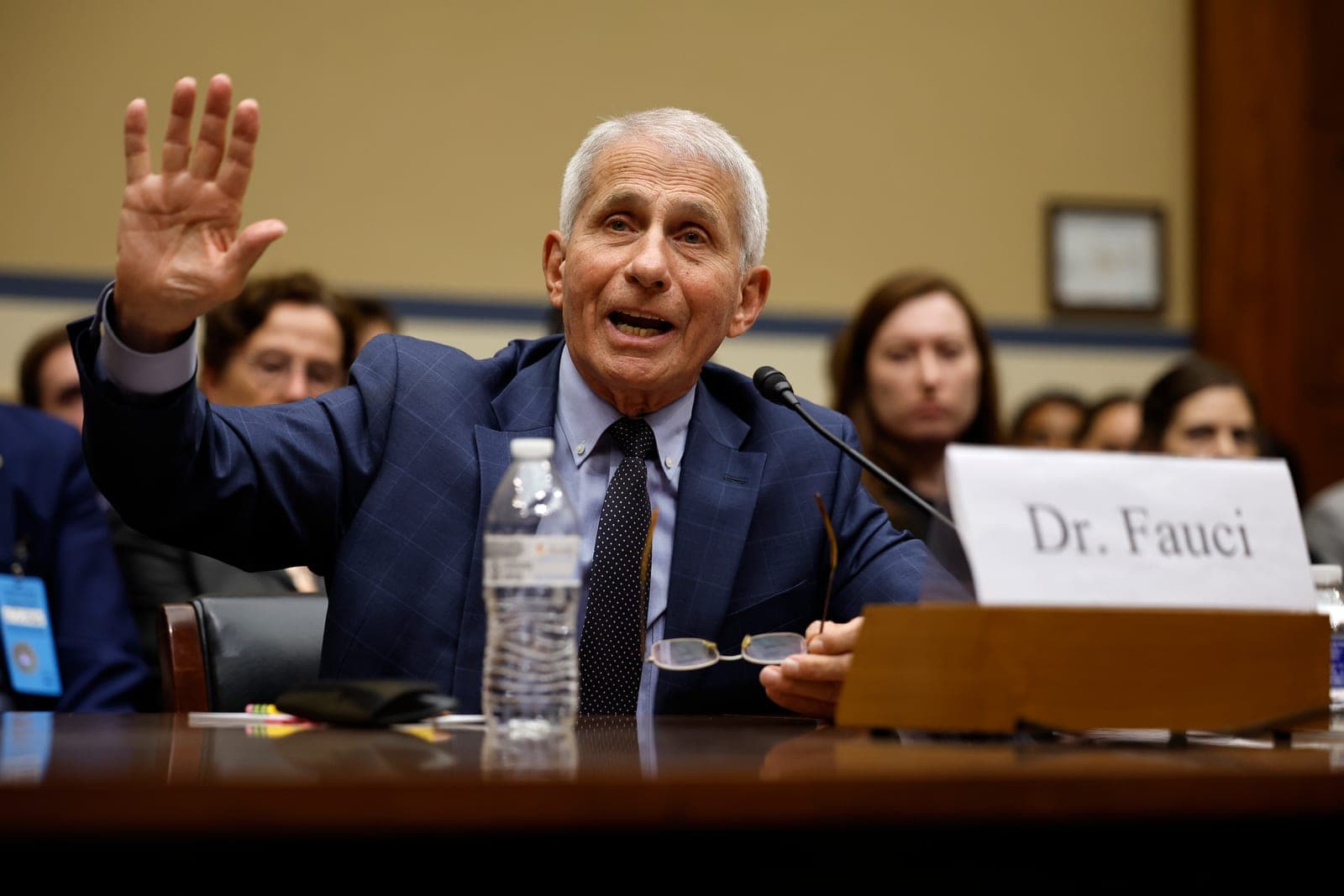
Sen. Rand Paul released more than 1,000 pages he described as Anthony Fauci’s pandemic diary entries, renewing his accusations about the origins of COVID-19. Fauci is expected to face Paul’s questions at a Senate committee hearing.
Paul said the pages, written between late 2019 and late 2022, were part of his ongoing inquiry into COVID-19’s origins and taxpayer-funded life sciences research. NPR said it had asked Paul’s office how he obtained them but had not received a response; Health Secretary Robert F. Kennedy Jr. suggested on X that his office provided them, though the details were unclear. Paul accused Fauci of telling the public something different from what he wrote privately.
The report describes a February 2020 call in which Fauci and scientists discussed both natural-origin and laboratory-origin theories while information was scarce. Virologist Robert Garry said more data were needed, and virologist Felicia Goodrum said later evidence favored a natural origin; the report also noted that researchers differ about whether the evidence is conclusive. Fauci did not respond to NPR, but his spokesperson sent a document fact-checking Paul’s claims and a letter accusing Paul of pursuing prosecution based on “imaginary crimes.”
Community verdict
23 VOTES
People in this story
SWIPE →Senator who released the diary pages and is pursuing an inquiry into COVID-19’s origins

Health Secretary who suggested his office may have provided Paul with the diary pages
Part of a bigger story
9 OUTLETS- ARTICLES
- 9
- OUTLETS
- 9
- AVG CRED
- 67

Discussion · 0
Loading comments…