Medicare's Plan to Expand AI Program Criticized as Overreach
Greg Landsman called the planned expansion unlawful and joined other lawmakers in seeking to end the pilot.

SOURCE CHECK
TAP FOR WHYBloomberg Law is an established specialist legal-news publisher, and the article identifies its author and attributes claims to documents, officials, lawmakers, and a legal expert. The text provides no direct evidence about its corrections practices.
- Source type — Established trade-press outlet specializing in legal and policy reporting.
- Editorial standards — Reporting distinguishes document findings and attributed claims from agency responses.
- Author attribution — The article names its reporter, Ganny Belloni.
- Correction history — No correction-practice information is available in the article.
The article cites released federal documents and includes responses from CMS, lawmakers, and a former HHS attorney. It presents competing explanations for early access data, though the underlying outcome data remain preliminary and CMS’s own analysis was still forthcoming.
HOW WE SCORE ↗The article reports documented concerns and lawmakers’ objections while giving CMS room to explain its evaluation process and address the early data. The agency’s promised analysis had not yet been released, limiting the available evidence on outcomes.
- Counterarguments presented — CMS disputes that the cited paragraph captures the full expansion decision and says it will consider access and quality findings.
- Source diversity — Uses federal documents, EFF analysis, CMS statements, lawmakers, and a former HHS attorney.
- Omitted context — The article notes that CMS’s own six-month analysis was still forthcoming.
- Loaded language — Most evaluative claims are directly attributed rather than presented as the article’s own conclusions.
The article reports concerns about the pilot alongside CMS’s defense and planned review, using attributed claims and largely neutral language. Its treatment of the policy does not show a discernible partisan lean.
- Language tone — Mostly restrained wording; criticism is attributed to lawmakers and document analyses.
- Source selection — Includes lawmakers and outside analysts as well as CMS responses.
- Framing — Focuses on reported plans, early data, and legal and legislative questions rather than advocating a position.
Federal documents show the Trump administration planned to expand the WISeR Medicare prior-authorization pilot nationwide, despite early data reporting delays and increased denials. Rep. Greg Landsman and other lawmakers have pushed back, including through a resolution to repeal the pilot.
Documents obtained through a Freedom of Information Act request show that the administration planned to expand WISeR, which uses AI to screen whether certain Medicare procedures are medically necessary. The pilot operates in six states and affects nearly 6.5 million people on traditional Medicare. The Electronic Frontier Foundation’s review of preliminary data found delays, increased denials, and physician reports of patient harm; CMS said some early data could reflect reporting issues and that it would release its own analysis.
Rep. Greg Landsman called the expansion plan unlawful and said he believed the agency had been cagey with lawmakers. In May, Landsman, Sen. Ron Wyden, and Rep. Suzan DelBene introduced a Congressional Review Act resolution to end the pilot; the Senate voted 46-50 to keep it in place. CMS said the disputed language addressed only one part of its evaluation process and that it would consider quality-of-care and beneficiary-access findings before deciding whether to expand WISeR.
Community verdict
11 VOTES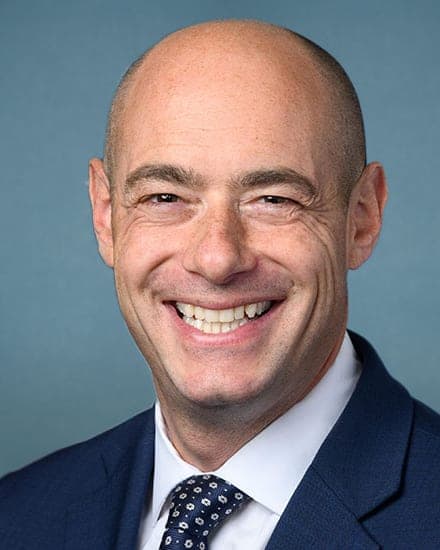
People in this story
SWIPE →Representative who criticized the CMS expansion plan and backed a resolution to end the pilot

Senator and co-introducer of the resolution to end the pilot

Representative and co-introducer of the resolution to end the pilot
CMS administrator who described the program’s goals
Discussion · 0
Loading comments…