House passes short-term bill to keep government funded past midterm elections
Mike Johnson defended the funding measure and accused Democrats of opposing it for political reasons.

SOURCE CHECK
TAP FOR WHYThe New York Post is an established national newspaper with identifiable authorship and an editorial operation, though its tabloid style and partisan reputation warrant some caution. The article attributes the lawmakers’ claims and reports the vote tally, but provides limited independent context.
- Source type — An established national newspaper, though its tabloid format calls for some caution.
- Editorial standards — The outlet has a professional newsroom, but its political coverage can be partisan in framing.
- Author attribution — The article names its author.
- Transparency — The article identifies the vote tally and attributes lawmakers’ statements, with limited independent sourcing.
The article gives the vote tally, identifies lawmakers who crossed party lines, and includes statements explaining opposing views. It provides little independent analysis of the measure’s provisions or the claims made by either side.
HOW WE SCORE ↗The article presents both Johnson’s defense of the bill and DeLauro’s objection, as well as the vote breakdown. Johnson’s account receives more space, and the article does not provide outside analysis of the competing claims or the bill’s details.
- Counterarguments presented — Includes DeLauro’s explanation for opposing the continuing resolution alongside Johnson’s criticism.
- Omitted context — The measure’s specific text and the underlying agreement are not described in detail.
- Source diversity — The article quotes officials from opposing parties but no independent policy experts or documents.
- Loaded language — The word “fumed” characterizes DeLauro’s response.
The report includes arguments from both Johnson and DeLauro, but gives more space to Johnson’s criticism of Democrats and does not independently examine that criticism. The overall framing tilts slightly right while remaining mostly straightforward.
- Source selection — Includes statements from both the Republican Speaker and a Democratic committee leader.
- Framing — The report foregrounds the House passage and includes Johnson’s political explanation for Democratic opposition.
- Language tone — The description that DeLauro “fumed” adds a mildly loaded characterization.
- Omission — Johnson’s claims about Democrats’ motives are not independently tested in the article.
The House passed a short-term funding bill, 220-205, that would keep the government open through Dec. 4; it now goes to the Senate. Speaker Mike Johnson defended the measure, while House Appropriations Committee ranking member Rosa DeLauro objected to its treatment of Border Patrol funding.
The House passed a continuing resolution by a 220-205 vote. The measure would fund the government through Dec. 4, beyond the Sept. 30 funding deadline and the Nov. 3 midterm elections. Six Democrats voted with Republicans to pass it, while Rep. Thomas Massie was the only Republican to vote against it. The bill now heads to the Senate, where Majority Leader John Thune was expected to bring it up before the August recess.
Speaker Mike Johnson said Democrats opposed the measure because they believed a shutdown could benefit them politically. Rep. Rosa DeLauro said she opposed it because it did not continue an agreement from the previous funding battle blocking Border Patrol funding; she said the bill would allow the Trump administration to fund the agency without substantial reforms.
Community verdict
27 VOTES
People in this story
SWIPE →
House Appropriations Committee ranking member opposing the continuing resolution
DeLauro's version of this story ↗
Representative who voted for the continuing resolution

Representative who voted for the continuing resolution

Representative who voted against the continuing resolution
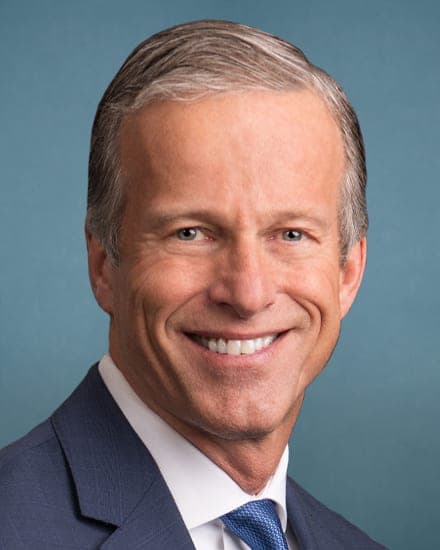
Senate Majority Leader expected to bring the bill up for a vote
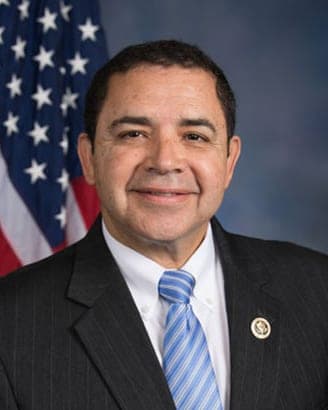
Representative who voted for the continuing resolution

Representative who voted for the continuing resolution

Representative who voted for the continuing resolution

Representative who voted for the continuing resolution
Part of a bigger story
17 OUTLETSThe House passed a $95 billion Republican-only budget resolution that Speaker Mike Johnson advanced, aimed at funding the Iran war and other Trump priorities. Its path in the Senate remains uncertain. Left-leaning outlets focus on disputes over whether the package's election provisions actually advance the SAVE Act and present Johnson's description as contested by Republican critics. Center outlets emphasize the narrow House passage, Republican divisions and uncertainty about Senate action. Right-leaning outlets frame the vote as progress for Republican priorities, especially election measures, while some also stress conflict with Senate Republicans.
- ARTICLES
- 23
- OUTLETS
- 17
- AVG CRED
- 71

Discussion · 0
Loading comments…