GOP senator tries to tell soft-spoken Mitch McConnell how to vote during farm bill markup
McConnell voted aye to advance the farm bill during his return to the Senate after an extended absence.

SOURCE CHECK
TAP FOR WHYThe New York Post is an established national outlet with an identified author, but its tabloid style warrants a lower score than leading newspapers of record. This article identifies its sources and distinguishes eyewitness description from attributed explanations.
- Source type — Established national news outlet, with a tabloid-oriented presentation.
- Transparency — It attributes Hoeven’s explanation to his spokesperson and McConnell’s remarks to his social media post.
- Author attribution — The article names its reporter.
The article gives a detailed account of the committee-room exchange and includes an explanation from Hoeven’s spokesperson and McConnell’s own statement. It is a short account of a single event, with limited context or independent perspectives on the broader farm bill.
HOW WE SCORE ↗The account provides Hoeven’s explanation and McConnell’s statement, alongside the reported events. It offers little broader context about the farm bill or perspectives beyond the senators and their representatives.
- Counterarguments presented — Hoeven’s spokesperson explains the misunderstanding behind his instruction.
- Source diversity — Includes observed events, a spokesperson, and McConnell’s social media statement, but few distinct perspectives.
- Loaded language — The headline uses a pointed description, while the body is mostly factual.
The article mainly describes the voting exchange and attributes the explanation for Hoeven’s mistake. Its references to McConnell’s health and public concern add a critical note but do not establish a consistent partisan framing.
- Language tone — Mostly descriptive, though the headline’s phrasing is dramatized.
- Source selection — Uses the senators’ actions, a spokesperson’s explanation, and McConnell’s own post.
- Framing — Centers on an unusual voting-room exchange rather than arguing for a political position.
Mitch McConnell voted to advance a farm bill during a Senate Agriculture Committee markup, despite John Hoeven initially telling him to vote no. The committee approved the measure 12-11, and the incident came during McConnell’s return after an extended health-related absence.
During a Senate Agriculture Committee markup, McConnell voted aye to advance the farm bill after Hoeven twice told him to vote no. A spokesperson for Hoeven said he initially thought the vote was to overrule the chair, then realized it was on final passage. McConnell’s vote was called a second time, and he again voted aye.
The farm bill cleared the committee 12-11 along party lines. McConnell had returned to the Senate after more than 90 days away for health reasons; the article says his absence had prompted public concern about his fitness to serve.
Community verdict
12 VOTES
People in this story
SWIPE →Senator who voted aye to advance the farm bill after returning from a health-related absence.

Senator who initially told McConnell to vote no during the committee markup.
Hoeven's version of this story ↗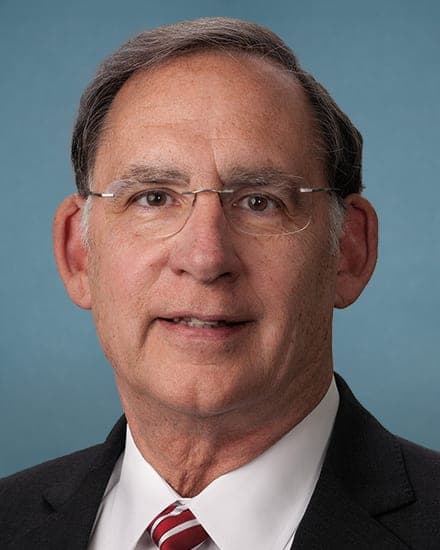
Agriculture Committee chairman who appeared to reassure McConnell about his vote.
Part of a bigger story
13 OUTLETSOutlets agree Mitch McConnell returned to Senate work after an extended health-related absence and later hesitated during a Farm Bill committee vote, drawing renewed attention to his health and ability to serve. Left-leaning outlets emphasize unanswered health questions, transparency, and fitness. Center outlets pair coverage of his return with local political reactions and scrutiny of his ability to serve. Right-leaning outlets cover his recovery and Senate duties alongside the farm-bill vote, with some raising capacity concerns and commentary calling for his retirement.
- ARTICLES
- 18
- OUTLETS
- 13
- AVG CRED
- 58
Discussion · 0
Loading comments…