Exclusive | California clan that swindled $18M from COVID cash inspires Senate bill to crack down on 'fraudster families'
Ernst says her investigation of family fraud schemes helped motivate her bill restricting certain federal aid.

SOURCE CHECK
TAP FOR WHYThe publisher’s supplied rating and national-news classification support a moderate credibility score. The article names its author and attributes its central policy claims to Ernst, but provides limited sourcing beyond her statements and the cases it recounts.
- Track record — The site's supplied rating is 66 based on 120 stories, indicating a moderate record.
- Source type — The publisher is classified as national news, a positive institutional signal.
- Author attribution — The article names Ryan King as its author.
- Source diversity — The article relies heavily on Ernst's account and does not present responses from people affected by the proposed policy.
The article gives specific descriptions of several fraud cases and identifies Ernst as the source of the proposed bill and $50 million figure. Its sourcing is limited, however: it offers little independent examination of the bill’s operation or potential effects and includes no opposing perspective.
HOW WE SCORE ↗The article gives extensive examples of alleged or proven fraud and explains Ernst’s proposed response, but it does not include a counterargument, an outside policy expert, or a perspective on the bill’s possible effects.
- Counterarguments presented — No criticism of the bill or alternative view of its proposed restrictions is presented.
- Source diversity — Ernst is the principal source for the policy rationale; the article does not include independent policy analysis.
- Loaded language — Repeated pejorative labels characterize the people in the fraud cases.
- Omitted context — The article does not explore how the bill would be applied beyond the stated carve-outs.
The article uses approving language for Ernst’s effort and strongly negative language about the people accused or convicted of fraud. Its emphasis favors a punitive anti-fraud policy, though it does not make a broader explicit partisan argument.
- Framing — The article presents Ernst’s bill as a response to family fraud schemes and highlights its rationale.
- Language tone — Loaded descriptions such as “shady bunch” and “fraudster families” give the piece a condemnatory tone toward the cases it describes.
- Source selection — Ernst is the main quoted political source; no critic of the proposal is included.
- Headline — The headline frames the bill as a crackdown inspired by a family that swindled COVID-relief money.
Sen. Joni Ernst says a California family’s $18 million COVID-relief fraud case helped inspire her bill restricting federal aid to people living with convicted fraudsters. The article also recounts other family fraud cases included in Ernst’s list of alleged or proven schemes.
The New York Post reports that Sen. Joni Ernst’s No Cash for Cohabitating Kins of Crooks Act would bar people living with convicted criminals or fraudsters from receiving certain federal grants, loans, subawards, or reimbursements, with exceptions for spouses living separately and survivors of domestic abuse. Ernst said her investigation identified family fraud schemes totaling $50 million.
The article recounts several cases Ernst highlighted, including a California family convicted in an $18 million COVID-relief fraud scheme and a Minnesota family conviction connected to the Feeding Our Future fraud scheme. It also describes allegations involving the Edwards family and other cases on Ernst’s list.
Community verdict
11 VOTES
People in this story
SWIPE →Senator promoting the No Cash for Cohabitating Kins of Crooks Act and presenting a list of family fraud cases
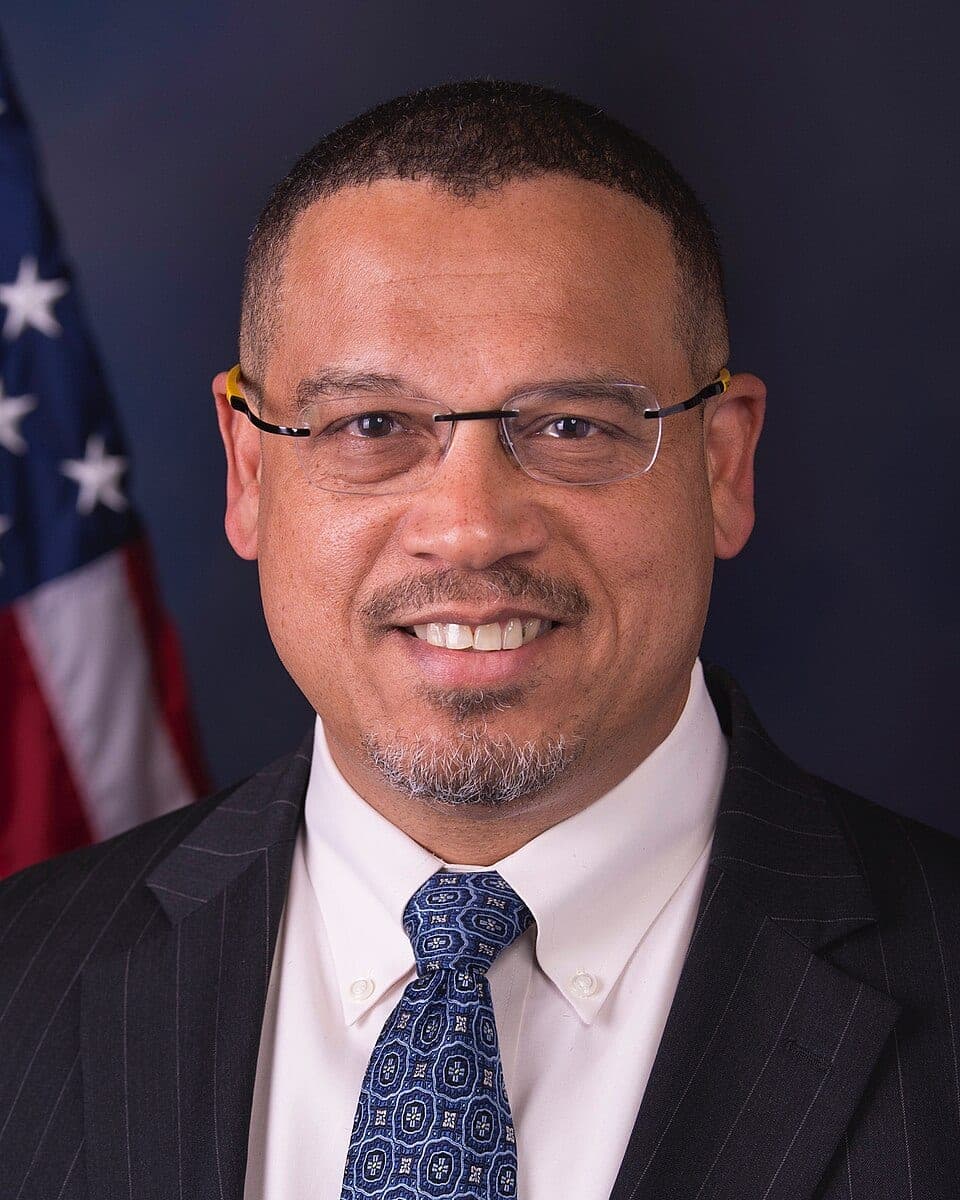
Minnesota attorney general mentioned in connection with a meeting involving a member of the Mohamed family
Discussion · 0
Loading comments…