Could disaster recovery include protecting women from domestic abuse and exploitation?
McBath said the bill translates expert recommendations into protections for survivors after disasters.
SOURCE CHECK
TAP FOR WHYCredibility rates Mississippi Today, where this article appeared. The other scores rate the article itself.
Mississippi Today is an established local news publisher, and the page clearly credits The 19th and states that the story was republished with permission. The reporting is attributed and relies on named experts, advocates and cited research, although this page is not the original reporting outlet.
- Source type — Established local-news publisher, supporting a solid but not national-wire-level rating.
- Transparency — Clearly identifies The 19th as the source and states that republication was authorized.
- Author attribution — The story credits Jessica Kutz and The 19th.
- Editorial standards — The article includes named sources and research references, though this text alone provides limited information about corrections practices.
The article supports its account with named advocates and researchers, survey results, studies and government reports, and it notes that the bill’s prospects are uncertain. It gives little space to opposing views or responses from FEMA or the administration, and Lee was unavailable for comment.
HOW WE SCORE ↗The article includes multiple experts, advocates, survey results and research, and it acknowledges limitations and uncertainty about the bill’s prospects. It does not include a response from FEMA or the Trump administration to the criticism of funding decisions, so competing perspectives are limited.
- Source diversity — Draws on advocates, a researcher, surveys and government reports.
- Counterarguments presented — No substantive opposing view or administration response appears.
- Opinion vs reporting — The article is reported as news and attributes evaluative claims to named sources.
- Omitted context — The bill’s uncertain prospects are noted, but the reasons behind the administration’s funding decisions are not presented.
The reporting uses mostly neutral language and presents the bill as a response to documented risks. Its critical account of the Trump administration’s reductions in services and funding, without an administration response, gives the framing a slight leftward tilt.
- Language tone — Generally descriptive and attributed rather than overtly partisan.
- Framing — Frames the legislation as a way to address gaps in disaster response and survivor protection.
- Source selection — Quotes advocates and researchers who support increased attention and resources for survivors.
- Omission — Includes criticism of administration funding decisions without a response from the administration.
Original publisher not identified
This article credits another publisher, which ChamberLight has not identified, so the scores are Mississippi Today's own.
Reps. Laurel Lee and Lucy McBath introduced legislation to strengthen FEMA’s response to gender-based violence after disasters, including improved shelter safety, staff training and household check-ins. The article describes evidence of increased abuse after disasters and says the bill’s progress is uncertain.
The article reports that Reps. Laurel Lee and Lucy McBath introduced a bill directing FEMA to strengthen safety at evacuation shelters, establish reporting protocols for domestic violence and sexual assault, train personnel to identify and support survivors, and meet with all adults in a household during post-disaster check-ins. McBath said the legislation turns recommendations from FEMA’s advisory council into law; Lee could not be reached for comment.
The article presents survey findings and research linking disasters with increased gender-based violence, and quotes advocates and researchers in support of stronger disaster-response measures. It also reports that domestic violence services have been affected by delayed or canceled grants and funding cuts under the Trump administration. The bill’s prospects remain unclear, though an advocate said introducing it could prompt action at the state level.
Community verdict
11 VOTES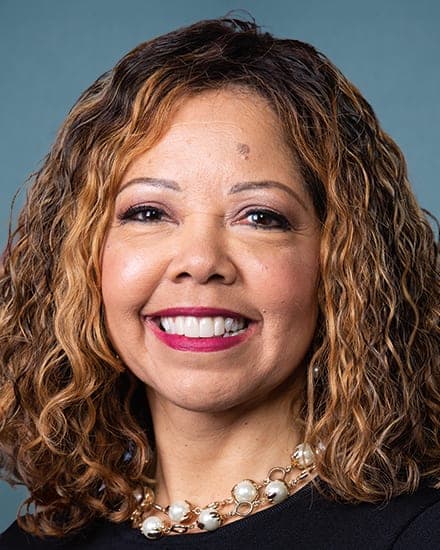
People in this story
SWIPE →Co-introduced and publicly supported legislation to address gender-based violence in disaster response.

Co-introduced legislation to address gender-based violence in disaster response.
Lee's version of this story ↗
President whose administration is described as reducing support for domestic violence services.
Discussion · 0
Loading comments…