CNN's K-File Rebuts Graham Platner's Nazi Tattoo Denial
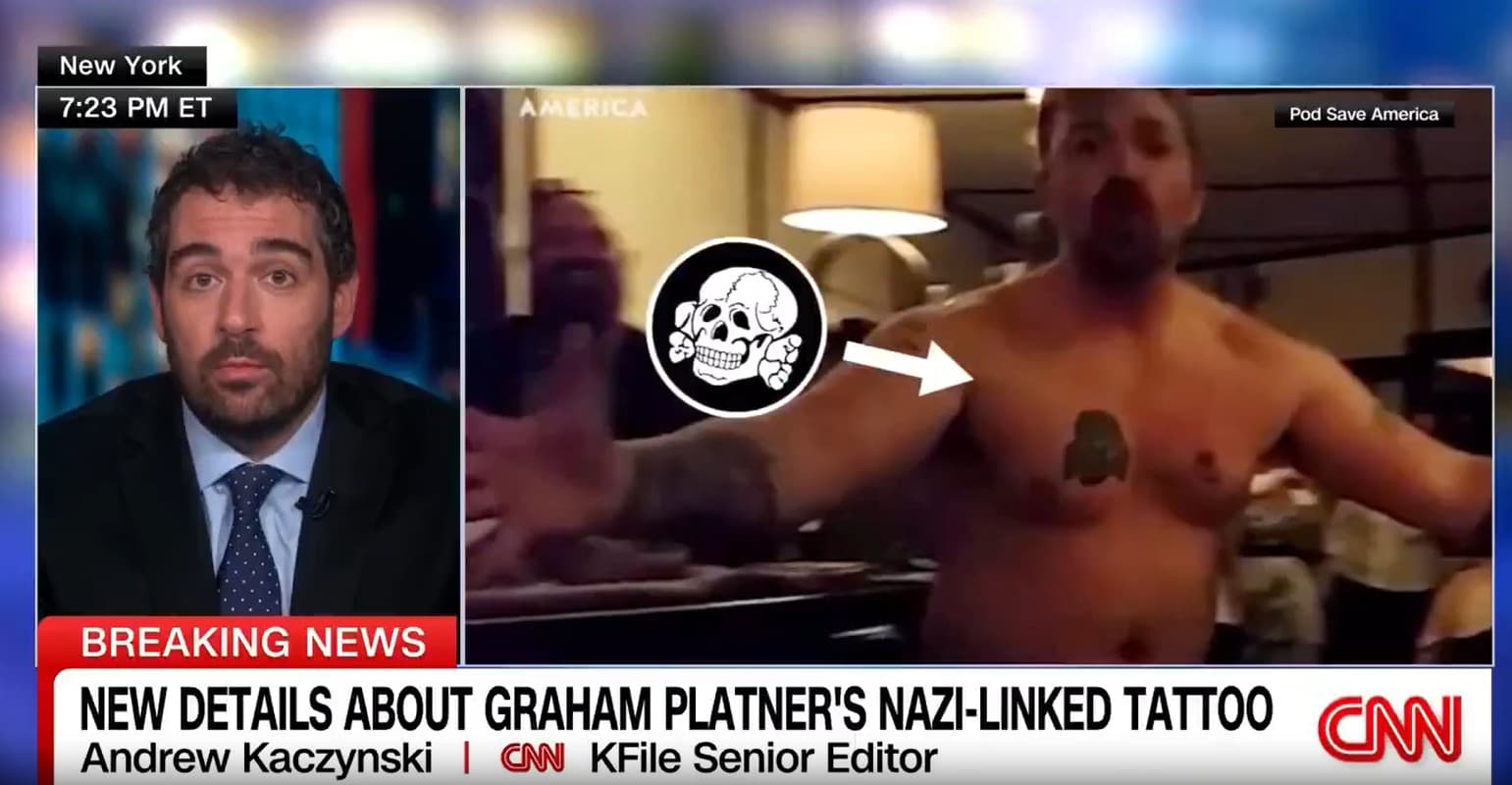
New reporting alleges Platner described his tattoo as “My Totenkopf” years before he said he learned of its Nazi association.
SOURCE CHECK
TAP FOR WHYMediaite is an established digital news outlet with an identifiable author, but this story primarily recounts reporting and a broadcast by other outlets rather than presenting extensive original documentation. Its national-news source classification supports a moderate assessment.
- Source type — An established digital news publisher, though not a newspaper of record or wire service.
- Editorial standards — The story attributes the allegations and includes the campaign’s denial, but offers limited original reporting of its own.
- Author attribution — The article names its author.
The article identifies the outlets and reporter behind the new claims and includes the campaign’s denial. It largely summarizes CNN’s account of New York Times and CNN reporting, however, and provides limited independent verification or response from Platner himself.
HOW WE SCORE ↗The article gives substantial space to allegations that challenge Platner’s account and includes his campaign’s denial. It also notes that the women interviewed gave differing descriptions, but does not provide an on-the-record response from Platner himself.
- Counterarguments presented — Includes Platner’s dispute of the serious allegations and the campaign’s explanation about when he learned of the tattoo’s association.
- Source diversity — Cites CNN and The New York Times reporting, along with the campaign’s response.
- Omitted context — The article provides no direct response from Platner to the newly reported account about the tattoo.
- Loaded language — The framing is pointed, particularly in the headline, but most claims in the body are attributed.
The article reports allegations and the campaign’s response in largely descriptive language. Its headline emphasizes that the new reporting challenges Platner’s denial, but the text does not show a distinct partisan position.
- Language tone — Mostly reports claims with attribution rather than adopting overtly partisan language.
- Framing — Centers reporting that challenges Platner’s explanation, while also presenting the campaign’s position.
- Source selection — Relies on CNN and New York Times reporting and includes the campaign’s response.
CNN reported new allegations challenging Senate candidate Graham Platner’s account of when he learned his tattoo was associated with Nazism. Platner’s campaign continued to say he did not know about the association until October, while disputing the most serious allegations about his past relationships.
CNN’s Andrew Kaczynski said a woman who had spoken anonymously to CNN later went public to CNN and The New York Times, alleging that Platner called the tattoo “My Totenkopf” years before the controversy. Kaczynski said her account was consistent with text messages she had previously shared describing the tattoo as a Nazi symbol before Platner said he learned of the association. CNN also cited Platner’s deleted Reddit posts discussing the symbol and other Nazi-linked imagery.
CNN reported that six women who dated Platner gave the Times differing accounts: three described him as caring, while three described volatile relationships and alleged demeaning behavior, heavy drinking, infidelity or physical intimidation. Platner strongly disputed the most serious allegations, and his campaign said they were false and politically motivated. The campaign stood by its position that he did not know about the tattoo’s Nazi association until October.
Community verdict
12 VOTES
People in this story
Maine Senate candidate whose account of when he learned about his tattoo’s Nazi association is challenged by new reporting
Part of a bigger story
26 OUTLETSOutlets report that Maine Senate candidate Graham Platner is facing scrutiny over a Nazi-associated tattoo, past online posts, reported sexual messages and other conduct. He has denied some allegations, while Democratic figures have continued to support him. Left-leaning outlets pair reporting on allegations and Platner’s response with a warning that internal attacks could help Republicans. Center outlets focus on the allegations, responses and divisions among Democrats, including criticism alongside continued support. Right-leaning outlets foreground damaging claims and frame continued Democratic backing as a political risk or a test of party standards.
- ARTICLES
- 49
- OUTLETS
- 26
- AVG CRED
- 59
Discussion · 0
Loading comments…