House Overwhelmingly Approves ALERT Act, 396-10
Ranking Member Adam Smith co-sponsored the ALERT Act, focusing on balancing safety technology requirements for diverse aircraft types.
SOURCE CHECK
TAP FOR WHYAero-News Network is a long-standing niche news outlet focused on the aviation industry. While it lacks the scale of major national newspapers, it provides original reporting and industry-specific expertise with clear author attribution.
- Track record — The source is a specialized aviation industry news service with a focused but established audience.
- Original journalism — The article provides original reporting on a specific legislative development with quotes and technical details.
- Author attribution — Article is attributed to a specific editor with a history in aviation journalism.
The reporting is balanced, citing specific bill numbers, vote counts, and the arguments of both House proponents and Senate critics. It identifies technical points of contention like ADS-B Out requirements.
HOW WE SCORE ↗The article provides a balanced view of the legislative conflict, explicitly stating the NTSB's shifting stance and detailing the specific criticisms raised by the Senate opposition.
- Counterarguments presented — Includes Senator Cruz's direct criticism of the House bill's adequacy.
- Source diversity — References the House T&I Committee, the Armed Services Committee, the Senate Commerce Committee, and the NTSB.
- Omitted context — Provides background on the 2025 collision that prompted the legislation.
The article is centrist, focusing on a bipartisan bill and presenting the technical policy disagreements between the House and Senate without favoring one side.
- Source selection — Cites both House sponsors (Graves) and Senate critics (Cruz) equally.
- Language tone — Uses neutral, factual language to describe the legislative process and the safety issues.
- Framing — Frames the story as a 'showdown' or debate over technical standards rather than a partisan political battle.
The U.S. House passed the ALERT Act (H.R. 7613) with an overwhelming 396-10 bipartisan vote, mandating new aviation collision avoidance technology. This sets up a Senate showdown over competing safety standards championed by Senators Ted Cruz and Maria Cantwell.
The U.S. House of Representatives has overwhelmingly approved the Airspace Location and Enhanced Risk Transparency (ALERT) Act of 2026 in a 396-10 vote. Introduced by a bipartisan coalition including Chairmen Sam Graves and Mike Rogers and Ranking Members Rick Larsen and Adam Smith, the bill responds to a tragic 2025 midair collision at Ronald Reagan Washington National Airport. The legislation mandates that airlines install next-generation collision avoidance technology by 2031 and sets requirements for civil helicopters and smaller non-military aircraft in busy airspace.
The passage of the House bill establishes a legislative conflict with the Senate, where Commerce Chair Ted Cruz and Ranking Member Maria Cantwell are advocating for their own 'ROTOR Act.' Senate leadership has criticized the House version as inadequate, particularly regarding location-broadcasting requirements for military aircraft. While the NTSB had initial reservations about the House bill, the agency has since expressed support for the amended version passed on Tuesday.
Community verdict
5 VOTES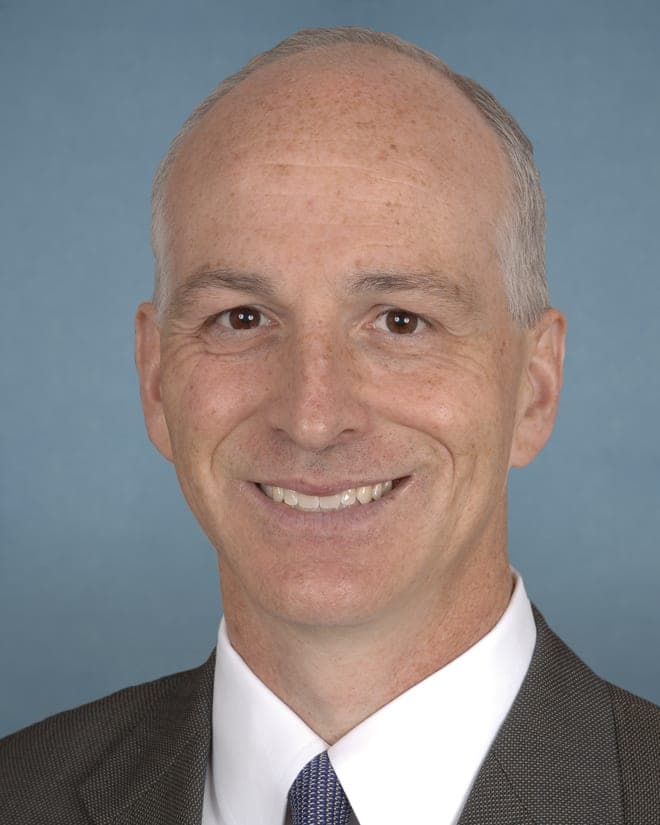
People in this story
SWIPE →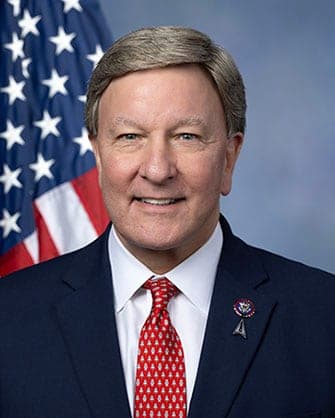
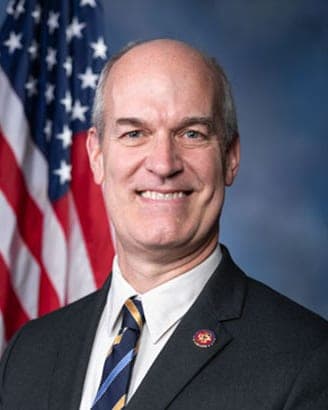
Transportation and Infrastructure Committee Ranking Member
Larsen's version of this story ↗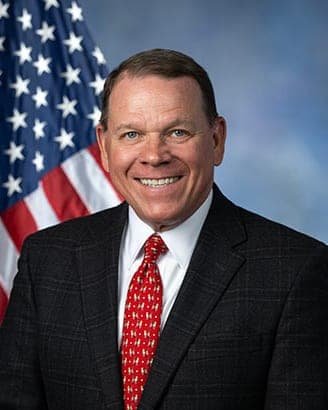
Transportation and Infrastructure Committee Chairman
Graves's version of this story ↗

Discussion · 0
Loading comments…