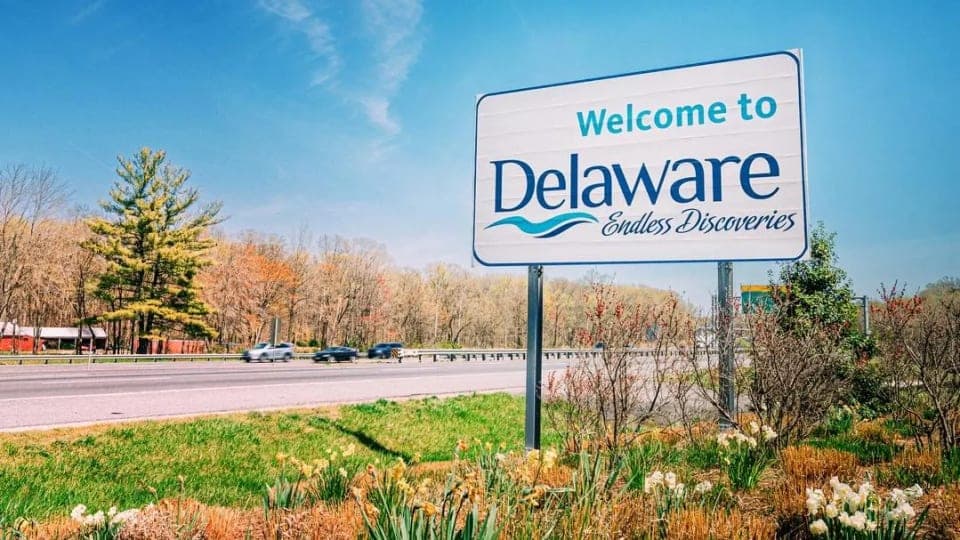
Delaware Elections: Who's Leading In Prediction Markets?
Arminio is McBride’s Republican challenger in the Delaware House race, which the article says is not expected to be particularly competitive.
SOURCE CHECK
TAP FOR WHYForbes is an established national publisher with editorial operations, though this Forbes Advisor article has no identified author in the supplied metadata. The publisher’s reputation supports a solid institutional score, while limited article-specific transparency tempers it.
- Source type — Established national publisher; Forbes Advisor presents consumer and financial information.
- Editorial standards — A recognizable editorial publisher, though the supplied material does not describe this article's review process.
- Author attribution — No author is identified in the supplied metadata.
- Transparency — The article identifies Kalshi as the source of its market data.
The article explains its data source and provides useful context about prediction markets, polls and regulatory disputes. The supplied text does not show race-specific market probabilities beyond the claim that both incumbents are above 90%, and the discussion offers limited detail on the opposing regulatory arguments.
HOW WE SCORE ↗The article gives context on both prediction markets and polls, and presents the dispute over election contracts as contested. Its brief account of the regulatory fight does not develop the competing arguments in much depth.
- Counterarguments presented — Describes the CFTC's objection, Kalshi's favorable court ruling and later objections from state regulators and other authorities.
- Source diversity — Draws on market data and summarizes legal and regulatory positions, but includes no direct interviews or detailed competing expert views.
- Omitted context — The supplied text does not include detailed odds for each candidate or extensive explanation of the regulators' arguments.
The article uses mostly descriptive language to explain market forecasts and regulation. It does not appear to advocate for a candidate or a political position.
- Language tone — Primarily explanatory and neutral.
- Framing — Treats market probabilities as forecasts and notes that they are not infallible.
- Source selection — Uses Kalshi market data and summarizes both regulatory objections and the court ruling.
The article reports that prediction markets put the Democratic incumbents in Delaware’s Senate and House races above 90% to win reelection. It explains how election markets work and outlines the ongoing debate over how they should be regulated.
The article identifies Senate incumbent Chris Coons, Republican challenger Michael Katz, Representative Sarah McBride and Republican challenger Joseph Arminio in Delaware’s two fall races. It says the incumbents’ odds of winning reelection are above 90% and that the figures come from Kalshi, whose probabilities are updated daily. The article does not provide the individual odds in the text presented here.
It explains that prediction-market prices imply probabilities and contrasts them with voter surveys, noting that neither method is infallible. It also describes the dispute over election contracts: the article says the CFTC objected to Kalshi’s proposed contracts in 2023, a federal district court ruled in Kalshi’s favor in 2024, and state regulators and other authorities have since challenged some event contracts as resembling gambling.
Community verdict
VOTING CLOSED
No good or bad look here
This story reports what happened without casting Arminio in a good or bad light, so readers don’t rate it and it doesn’t count toward Arminio’s record.
People in this story
SWIPE →
Democratic incumbent in the Delaware Senate race
Coons's version of this story ↗
Democratic incumbent in Delaware’s at-large House race
McBride's version of this story ↗
Named in an example of an election-related contract offered by Kalshi
President whose administration the article says objected to election contracts
Discussion · 0
Loading comments…