R.I. congressional delegates take aim at politicization of federal disaster relief funds
Amo introduced legislation to change how federal disaster-aid requests are evaluated.

SOURCE CHECK
TAP FOR WHYThe Brown Daily Herald is an established university newspaper that attributes reporting to a named author and quotes named sources. The article includes expert and official perspectives, though the White House and FEMA did not respond to requests for comment.
- Source type — An established local university newspaper with an identifiable newsroom.
- Author attribution — The page identifies a named student journalist.
- Source diversity — The report includes a professor, a FEMA statement and local-government and community voices.
- Transparency — The article attributes claims and notes that the White House and FEMA did not respond.
The report gives specific details about the bills and the aid denials, cites a PBS review and includes expert, government and community perspectives. The federal agencies did not respond, and the article offers limited detail about the review’s methodology or the administration’s reasoning for the denials.
HOW WE SCORE ↗The article presents both the allegation of partisan treatment and FEMA’s stated explanation, alongside historical context and local perspectives. However, the White House and FEMA did not respond to the reporter, and the article provides limited detail about the basis for the denials.
- Counterarguments presented — FEMA Administrator Cameron Hamilton’s explanation is included.
- Source diversity — Sources include a professor, a federal official, local government representatives and a community organization.
- Omitted context — The agencies’ lack of response leaves their fuller reasoning for the denial absent.
- Loaded language — The politicization framing is pointed, but the article attributes the accusation rather than presenting it as established fact.
The article’s framing foregrounds the allegation that disaster aid was politicized and reports a partisan disparity in approval rates. It also includes historical context and FEMA’s stated rationale, keeping the overall language mostly reportorial.
- Framing — The headline and lead focus on congressional criticism of politicization.
- Source selection — The article includes a professor’s criticism and local impacts, while also quoting FEMA’s explanation.
- Language tone — Most claims are attributed, though Amo’s accusation is prominent.
Rep. Gabe Amo introduced the House version of the Disaster Relief Fairness Act after FEMA denied Rhode Island disaster aid for February’s blizzard. The proposal would base disaster-aid decisions on FEMA benchmarks rather than the current standard described in the article.
Rep. Gabe Amo introduced the House bill on Sept. 21, following FEMA’s denial of Rhode Island’s requests for aid after a February blizzard that caused more than $19 million in damages. Sens. Sheldon Whitehouse and Jack Reed co-sponsored a corresponding Senate bill introduced in July. The House proposal would require disaster-aid decisions to use FEMA benchmarks such as damage costs, available resources and infrastructure impacts.
Amo accused President Trump of playing politics with disaster aid. The article cited a PBS review reporting that Trump approved 80% of requests from Republican governors and 60% from Democratic governors. FEMA rejected Gov. Dan McKee’s appeal in a Sept. 2 letter; the following day, FEMA Administrator Cameron Hamilton wrote that Rhode Island and three other Democratic-led states provided “no new information.”
Community verdict
11 VOTES
People in this story
SWIPE →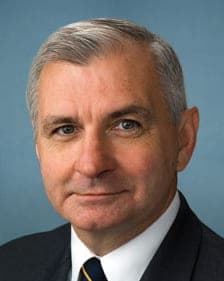
Co-sponsored the Senate version of the Disaster Relief Fairness Act

President discussed in connection with federal disaster-aid decisions

Co-sponsored the Senate version of the Disaster Relief Fairness Act
Discussion · 0
Loading comments…