US lawmakers push bill to curb investments in Chinese biotech sector
Moolenaar unveiled the bill and warned that Chinese biotech partnerships could threaten U.S. pharmaceutical manufacturing.
SOURCE CHECK
TAP FOR WHYANI is an established news agency, but this brief relies heavily on lawmakers' announcement and statements, with little independent reporting or visible contextual sourcing.
- Source type — An established international news agency, though not a U.S. outlet specializing in congressional reporting.
- Editorial standards — The text is written as a conventional news brief, but gives little indication of independent verification.
- Author attribution — The article is credited to ANI but does not identify an individual reporter.
- Source diversity — The account relies on the lawmakers' announcement and their statements, without outside sources.
The brief clearly describes the proposal and attributes the lawmakers' claims, but it offers no opposing perspective, independent expert comment or additional verification.
HOW WE SCORE ↗The article reports the bill's aims and proponents' concerns but includes no response from opponents, affected companies or independent experts.
- Counterarguments presented — No opposing view or critique of the proposed restrictions appears.
- Source diversity — The account relies on Moolenaar and Dingell, the lawmakers promoting the measure.
- Opinion vs reporting — The article is presented as news and attributes the lawmakers' claims, but does not independently test them.
The report uses mostly neutral language and attributes the claims to the lawmakers. Its reliance on their supportive account reflects limited sourcing rather than a clearly partisan framing.
- Language tone — The article uses conventional news language and attributes claims rather than presenting them as established facts.
- Source selection — Only the bill's proponents are quoted, leaving the report with a one-sided source base.
- Framing — The article describes the proposal as a national-security measure without an overt partisan judgment.
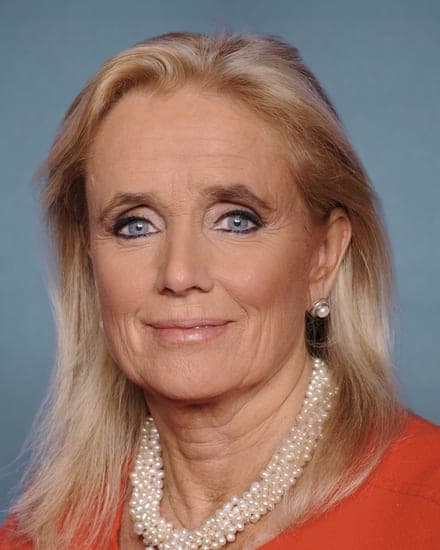
John Moolenaar and Debbie Dingell unveiled legislation to subject U.S. investments in Chinese biotechnology companies to greater national-security scrutiny. They said the measure would protect U.S. pharmaceutical and biotechnology capacity..
John Moolenaar and Debbie Dingell unveiled the Biotech Investment National Security Act, which would expand oversight of U.S. investments in sectors considered important to national security, particularly biotechnology. The article says the proposal would bring investments in pharmaceutical development, biologics manufacturing and clinical research under the framework established by the Comprehensive Outbound Investment National Security Act.
Moolenaar said partnerships between major pharmaceutical companies and Chinese firms could weaken U.S. pharmaceutical manufacturing and supply chains. Dingell said the United States should avoid dependence on China for pharmaceutical ingredients, drug development and medical supplies, and described a strong domestic biotechnology and pharmaceutical industry as important to patients, jobs and national security.
Community verdict
18 VOTES
People in this story
SWIPE →House Select Committee on China chairman and co-unveiler of the bill
Discussion · 0
Loading comments…