At the end, add the following:SEC. 3. EXEMPTING AI DATA CENTERS FROM BONUS DEPRECIATION.
(a) In General.--Section 168(k) of the Internal Revenue Code of 1986 is amended--
(1) in paragraph (9)--
(A) in subparagraph (A), by striking “or” at the end,
(B) in subparagraph (B), by striking the period at the end and inserting “, or”, and
(C) by adding at the end the following new subparagraph:
“(C) any property used in an AI data center.”, and
(2) by adding at the end the following new paragraph:
“(11) AI data center.--
“(A) In general.--For purposes of paragraph (9)(C), the term ‘AI data center’ means a permanent or semipermanent structure, or group of such structures, which--
“(i) is dedicated to--
“(I) the centralized accommodation, interconnection, and operation of information technology and network telecommunications equipment (including not less than 1 graphics processing unit), and
“(II) providing data storage, processing, and transport services, and
“(ii) at least 20 percent of which is used for developing or operating artificial intelligence.
“(B) Exclusion.--
“(i) In general.--For purposes of paragraph (9)(C), the term ‘AI data center’ shall not include any structure or group of structures described in subparagraph (A) which has obtained the LEED Green Building Rating System certification at the Platinum or Gold level.
“(ii) Alternate standard.--The Secretary of Energy and the Administrator of the Environmental Protection Agency may jointly--
“(I) establish or identify an alternate standard that is equivalent to or exceeds the standard described in clause (i), and
“(II) as an alternative to the standard described in clause (i), allow the use of such alternate standard for purposes of the exclusion provided under such clause.
“(C) Definitions.--For purposes of this paragraph--
“(i) Artificial intelligence.--The term ‘artificial intelligence’ has the meaning given such term in section 5002 of the National Artificial Intelligence Initiative Act of 2020 (15 U.S.C. 9401).
“(ii) Graphics processing unit.--The term ‘graphic processing unit’ means a specialized electronic circuit designed to accelerate image rendering, graphics processing, and parallel computation tasks.
“(iii) LEED green building rating system.--The term ‘LEED Green Building Rating System’ means the most recent version of the Leadership in Energy and Environmental Design green building rating system for--
“(I) Building Design and Construction, or
“(II) Operations and Maintenance,
as developed by the U.S. Green Building Council.”.
(b) Application of Leased Property Rules to AI Data Centers.--Section 168 of the Internal Revenue Code of 1986 is amended by adding at the end the following new subsection:
“(o) Application of Leased Property Rules to AI Data Centers.--In the case of any AI data center (as defined in subsection (k)(11)) which is subject to a lease, the depreciation deduction provided by section 167(a) shall be determined pursuant to the rules under section 1.167(a)-11(e)(3)(iii) of title 26, Code of Federal Regulations (as in effect on the date of enactment of this subsection).”.
(c) Effective Date.--The amendments made by this section shall apply to property placed in service after the date of enactment of this Act.
SEC. 4. DATA CENTER DISCLOSURES.
(a) Definitions.--In this section:
(1) Administrator.--The term “Administrator” means the Administrator of the Environmental Protection Agency.
(2) Affected community.--The term “affected community” means a community that--
(A) is subject to the jurisdiction of the same unit of local government as a covered data center; or
(B) is served by the same electric utility, water authority, or drinking water utility as a covered data center.
(3) Affected unit of local government.--The term “affected unit of local government” means any unit of local government within the jurisdiction of which a covered data center or affected community is located.
(4) Applicable recipient.--The term “applicable recipient”, with respect to a disclosure under subsection (b) or a report under subsection (c), means--
(A) if the applicable covered data center is located in an electing State, the electing State; and
(B) if the applicable covered data center is not located in an electing State, the Secretary and the Administrator.
(5) Covered data center.--
(A) In general.--The term “covered data center” means a data center, including a dual-use data center and a data center that is co-located or otherwise shares commercial space with a dedicated Federal data center, the power demand of which is 25 megawatts or more.
(B) Exclusion.--The term “covered data center” does not include a dedicated Federal data center.
(6) Data center.--The term “data center” has the meaning given the term in section 453(a) of the Energy Independence and Security Act of 2007 (42 U.S.C. 17112(a)).
(7) Data center operator.--The term “data center operator” means any person that operates a covered data center.
(8) Dedicated federal data center.--The term “dedicated Federal data center” means a data center that is owned and operated exclusively by or for the Federal Government (including any element of the intelligence community (as defined in section 3 of the National Security Act of 1947 (50 U.S.C. 3003))).
(9) Dual-use data center.--The term “dual-use data center” means a data center that provides services to both the Federal Government and 1 or more non-Federal interests.
(10) Director.--The term “Director” means the Director of the Office of Management and Budget.
(11) Electing state.--The term “electing State” means a State that--
(A) has elected to receive disclosures and reports under this section;
(B) has established a system for receiving those disclosures and reports; and
(C) has notified the Secretary and the Administrator that the State will--
(i) receive those disclosures and reports; and
(ii) submit to the Secretary and the Administrator an annual compilation of those disclosures and reports under subsection (d)(1).
(12) Power usage effectiveness.--The term “power usage effectiveness” has the meaning given the term in the document published in 2026 by the International Organization for Standardization and the International Electrotechnical Commission entitled “Information technology -- Data centres key performance indicators -- Part 2: Power usage effectiveness (PUE)” and numbered ISO/IEC 30134-2:2026 (or a successor document).
(13) Secretary.--The term “Secretary” means the Secretary of Energy.
(14) State.--The term “State” means--
(A) each of the several States of the United States;
(B) the District of Columbia;
(C) the Commonwealth of Puerto Rico;
(D) the United States Virgin Islands;
(E) Guam;
(F) American Samoa;
(G) the Commonwealth of the Northern Mariana Islands;
(H) an Indian tribe included on the list published by the Secretary of the Interior under section 104 of the Federally Recognized Indian Tribe List Act of 1994 (25 U.S.C. 5131);
(I) the Federated States of Micronesia;
(J) the Republic of the Marshall Islands; and
(K) the Republic of Palau.
(15) Water usage effectiveness.--The term “water usage effectiveness” has the meaning given the term in the document published in 2022 by the International Organization for Standardization and the International Electrotechnical Commission entitled “Information technology -- Data centres key performance indicators -- Part 9: Water usage effectiveness (WUE)” and numbered ISO/IEC 30134-9:2022 (or a successor document).
(b) Initial Disclosures.--
(1) In general.--Not later than 180 days before the date on which a covered data center commences operations, the data center operator shall submit to the applicable recipient an initial disclosure that includes an estimate of the information described in paragraphs (1) through (4) of subsection (c) for the 1-year period beginning on the date on which the covered data center is expected to commence operations.
(2) Existing data centers.--Not later than 180 days after the date of enactment of this Act, each covered data center operating as of that date of enactment shall submit to the applicable recipient an initial disclosure that includes the information required to be included in an annual mandatory report under subsection (c) for the most recent calendar year ending before that date of enactment.
(3) Federal data centers.--
(A) Dual-use data centers.--With respect to a dual-use data center--
(i) this subsection and subsection (c) shall only apply to the extent prescribed by the Director under subsection (e)(1)(D); and
(ii) in providing initial disclosures under this subsection or submitting an annual report under subsection (c) as so prescribed, the data center operator shall comply with all applicable requirements established under subsection (e), including the standards established under paragraph (1)(D) of that subsection and any exemptions from disclosure established under paragraph (2)(C) of that subsection.
(B) Dedicated federal data centers.--This subsection and subsection (c) shall not apply to a dedicated Federal data center.
(c) Annual Mandatory Report.--Not later than December 31 of each year, each data center operator shall submit to the applicable recipient an annual report that describes, for the most recent preceding calendar year, the following information for each applicable covered data center operated by the data center operator:
(1) Water access and usage.--
(A) The total number of gallons of water withdrawn or consumed each month by the covered data center during the year covered by the report.
(B) The source of the water so withdrawn or consumed by the covered data center, such as a municipal drinking water system, groundwater, surface water, or reclaimed water.
(C) The annual average water usage effectiveness of the covered data center.
(D) Any water rights, permits, or long-term supply agreements held by a data center operator for a covered data center, including the term and quantity of water subject to those rights, that permit, or that agreement.
(2) Electricity access and usage.--
(A) The total electricity contracted for or consumed by the covered data center each month during the year covered by the report, measured in megawatt-hours, and the peak electricity demand of the covered data center during that year, measured in megawatts.
(B) If the covered data center uses behind-the-meter power generation, the method used to generate that power, including the percentage of total electricity consumed by the covered data center from each behind-the-meter generation source type, calculated on an actual-dispatch basis.
(C) The total greenhouse gas emissions of the covered data center in carbon dioxide-equivalent metric tons (calculated on the basis of energy consumption).
(D) The annual average power usage effectiveness of the covered data center.
(E) Any long-term power purchase agreements or utility service agreements to which the covered data center operator was a party during the year covered by the report, including--
(i) the term of the power purchase agreement; and
(ii) the quantity of power covered by the power purchase agreement.
(3) Backup power.--
(A) The types of backup power maintained for the covered data center, including generators, batteries, and all other sources of backup power.
(B) The total backup capacity maintained for the covered data center.
(C) The quantity of fuel stored on-site for backup power.
(D) The total hours that the covered data center operated using backup power during the year covered by the report.
(E) The annual emissions of carbon dioxide, and criteria pollutants for which there are national ambient air quality standards under section 109 of the Clean Air Act (42 U.S.C. 7409), from backup power during the year covered by the report.… (text continues; see the full text)
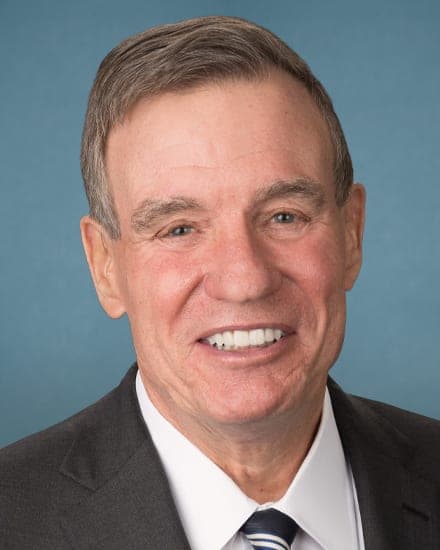 SPONSORSen. Mark R. WarnerDEMOCRAT · VA